
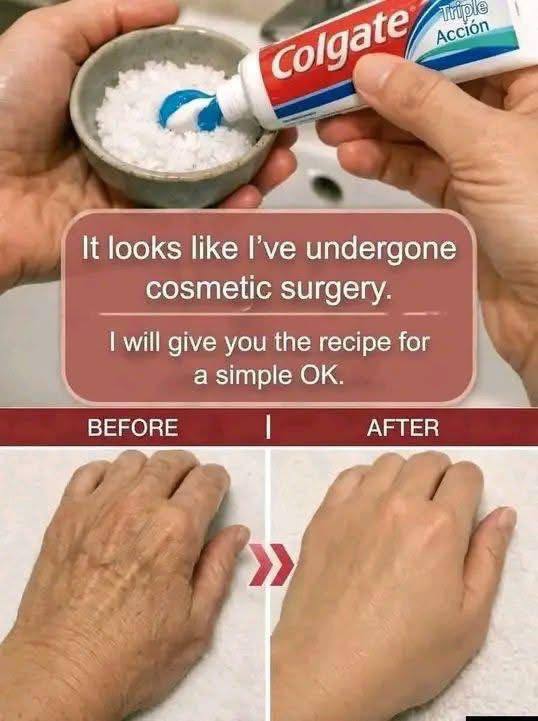

Introduction
In the quest for youthful, radiant skin, many of us have explored countless serums, creams, and treatments. But what if the secret to diminishing age spots and smoothing out wrinkles was hiding in plain sight, right in our bathroom cabinet? Today, we’re diving into a fascinating, albeit unconventional, home remedy that has been buzzing in beauty circles: using toothpaste to naturally improve the appearance of age spots and wrinkles. While this might sound surprising, the idea stems from the common ingredients found in many toothpastes, which some believe can offer unexpected benefits for the skin.
This “recipe” isn’t about ingesting toothpaste, but rather about creating a topical application that harnesses the purported properties of its components. The concept revolves around the gentle exfoliation and brightening effects attributed to certain toothpaste ingredients, combined with the scrubbing power of a common household granular substance. The allure of such a natural, accessible, and seemingly simple solution is undeniable, especially for those looking to explore alternatives to more expensive or invasive cosmetic procedures. However, it’s crucial to approach such remedies with an informed perspective, understanding both their potential and their limitations. We’re here to share the full scoop on how this intriguing method is put into practice, allowing you to decide if this natural approach aligns with your skincare curiosity.
It’s important to preface this by saying that while anecdotal evidence abounds, scientific backing for using toothpaste on skin for anti-aging purposes is scarce. This article is intended for informational purposes, exploring a popular home remedy. As with any new skincare regimen, especially one involving products not specifically designed for facial application, caution and a patch test are always advised. Our goal is to provide a comprehensive guide to this unique method, detailing the ingredients, instructions, and important considerations, so you can make an educated choice if you decide to give this natural approach a try. Let’s delve into the specifics of this intriguing beauty hack.
Nutritional Information
Per serving (approximate values):
- Calories: 0
- Protein: 0g
- Carbohydrates: 0g
- Fat: 0g
- Fiber: 0g
- Sodium: 0mg
Ingredients
- 1 teaspoon white toothpaste (such as Colgate, avoiding gel or colored varieties with harsh abrasives)
- 1 tablespoon granulated white sugar (for exfoliation) OR 1 tablespoon fine sea salt (for a slightly stronger exfoliation)
- 1-2 drops of a carrier oil (such as jojoba oil, almond oil, or olive oil, optional, for added moisture)
Instructions
- Gather Your Ingredients: Ensure you have all your ingredients ready before you begin. For best results, use a plain white toothpaste, as colored gels or those with intense whitening agents might be too harsh for sensitive skin.
- Prepare Your Mixing Bowl: Take a small, clean, non-metallic bowl. This will be used to mix your toothpaste concoction.
- Add Toothpaste: Squeeze approximately 1 teaspoon of white toothpaste into the bowl. The precise amount can be adjusted slightly based on the area you intend to cover, but start with a small quantity.
- Add Granulated Sugar or Salt: Carefully measure out 1 tablespoon of granulated white sugar or fine sea salt and add it to the bowl with the toothpaste. If you have very sensitive skin, you might want to start with sugar as it’s generally less abrasive than salt.
- (Optional) Add Carrier Oil: If your skin tends to be dry or you’re concerned about potential irritation, add 1-2 drops of a mild carrier oil like jojoba, almond, or olive oil to the mixture. This can help to add moisture and slightly dilute the intensity of the toothpaste.
- Mix Thoroughly: Using a small spoon or spatula, mix the toothpaste and sugar/salt together until they form a consistent paste. The consistency should be thick enough to apply without dripping, but not so dry that it crumbles. If it’s too thick, you can add another tiny drop of carrier oil or a single drop of water; if it’s too runny, add a tiny pinch more sugar/salt.
- Perform a Patch Test: Before applying the mixture to your face or any large area, it is absolutely crucial to perform a patch test. Apply a small amount of the paste to an inconspicuous area of your skin, such as behind your ear or on your inner forearm. Leave it on for 5-10 minutes, then rinse off. Wait 24 hours to observe for any signs of redness, itching, burning, or irritation. If any adverse reactions occur, do not proceed with the full application.
- Cleanse Your Skin: If the patch test is successful, gently cleanse the area of skin where you intend to apply the mixture. Use a mild cleanser to remove any makeup, dirt, or oils. Pat your skin dry with a clean towel.
- Apply the Mixture: Using your fingertips or a soft brush, carefully apply a thin, even layer of the toothpaste and sugar/salt paste directly onto the age spots and wrinkled areas you wish to treat. Avoid applying it to very sensitive areas like around the eyes or lips.
- Gently Massage: Once applied, very gently massage the mixture into your skin using small, circular motions for about 1-2 minutes. The sugar or salt acts as a physical exfoliant, helping to slough off dead skin cells and promote circulation. Be extremely gentle to avoid micro-tears in the skin.
- Leave on (Optional, with caution): Some proponents of this method suggest leaving the paste on for an additional 5-10 minutes after massaging. However, if you have sensitive skin or are new to this remedy, it’s best to rinse immediately after gentle massage. If you choose to leave it on, monitor your skin closely for any discomfort.
- Rinse Thoroughly: After the desired time (or immediately after massage), rinse the treated area thoroughly with lukewarm water. Ensure all traces of the paste are removed. You might need to use a soft washcloth to help gently wipe it away.
- Pat Dry: Gently pat your skin dry with a clean, soft towel. Avoid rubbing, as your skin may be slightly sensitive after exfoliation.
- Moisturize: Immediately follow up with a generous application of a hydrating, non-comedogenic moisturizer. This will help to soothe the skin, replenish moisture, and protect your skin barrier.
- Frequency: Due to the abrasive and potentially irritating nature of this remedy, it is recommended to use it no more than once or twice a week. Over-exfoliation can lead to skin damage and increased sensitivity.
Cooking Tips and Variations
While this isn’t a culinary recipe, we can offer “preparation tips” and “variations” for this skincare remedy. For best results, always prioritize skin safety and listen to your skin’s reactions. When selecting your toothpaste, opt for a basic white paste, not a gel, and avoid any “whitening” or “tartar control” formulas that might contain harsher chemicals or stronger abrasives. The simpler the toothpaste, the less likely it is to cause irritation. If you have extremely sensitive skin, consider diluting the toothpaste further with a few extra drops of carrier oil or even a tiny bit of aloe vera gel, which is known for its soothing properties.
Regarding the abrasive component, granulated sugar is generally softer and dissolves more easily than salt, making it a better choice for those with delicate skin. If you find even fine sugar too harsh, you could experiment with finely ground oat flour as an alternative gentle exfoliant, though this changes the texture significantly. For an added boost of antioxidants, you could mix in a tiny pinch of turmeric powder, being mindful that turmeric can temporarily stain skin, especially if you have very fair skin or leave it on too long. Always ensure the turmeric is pure and high quality to avoid dyes. Another variation involves replacing the carrier oil with a few drops of fresh lemon juice for its natural brightening properties, but be extremely cautious with lemon juice as it can increase photosensitivity and cause irritation, especially when combined with toothpaste. If using lemon juice, apply only at night and wear strong sunscreen during the day.
The “massage” step is crucial; it should be more of a gentle buffing than a vigorous scrub. Think of it as polishing, not scouring. Too much pressure can cause micro-tears in the skin, which can worsen skin concerns rather than improve them. The duration of application is also key: start with a very short contact time, perhaps just a minute or two of gentle massage and then immediate rinsing, especially for your first few attempts. As your skin potentially acclimates, you might gradually increase the contact time, but never exceed 10 minutes. Always err on the side of caution. Remember, consistency over intensity is often more effective for skincare remedies, but with this particular method, less is definitely more.
Storage and Reheating
This “recipe” is not designed for storage or “reheating” in the traditional sense, as it’s a fresh preparation intended for immediate use. The active ingredients in toothpaste, combined with the sugar or salt, are best mixed right before application to ensure their efficacy and prevent any degradation or undesirable chemical reactions over time. Storing the mixture could lead to several issues, including the toothpaste drying out, the sugar or salt dissolving, or bacterial growth if not kept in sterile conditions. Moreover, the fresh exfoliating texture of the sugar or salt is integral to the remedy’s purported benefits, and this texture would be lost if stored.
Therefore, it is strongly recommended to prepare a fresh batch for each application. Only mix the amount you intend to use for a single treatment. If you happen to mix too much, it’s best to discard any leftover paste rather than attempting to store it. This ensures that you are always using fresh, potent ingredients and minimizes the risk of introducing contaminants or using an altered, potentially less effective, or even harmful mixture on your skin. Think of it as a fresh facial mask: you wouldn’t typically store a used or leftover mask for later application. Always use clean utensils and bowls for mixing to maintain hygiene.
Frequently Asked Questions
Is it safe to use toothpaste on my skin for age spots and wrinkles?
Using toothpaste on your skin is a widely discussed home remedy, but it comes with significant caveats. Toothpaste is formulated for dental hygiene, not for the delicate skin on your face. Ingredients like fluoride, detergents (SLS), alcohol, and strong abrasives can be irritating, drying, or even cause chemical burns and allergic reactions, especially for sensitive skin. While some people claim to see results, dermatologists generally advise against it due to the potential for adverse effects. Always perform a patch test and discontinue use immediately if irritation occurs.
How often should I apply this toothpaste mixture to my skin?
Due to the potentially irritating nature of toothpaste and the abrasive quality of sugar or salt, this mixture should be used very sparingly. It is generally recommended to apply it no more than once or twice a week, at most. Over-exfoliation or frequent application can strip your skin’s natural oils, compromise its protective barrier, and lead to increased sensitivity, redness, dryness, or even breakouts. Always observe how your skin reacts and adjust the frequency accordingly, or stop if you experience any discomfort.
What kind of toothpaste is best for this remedy, and what should I avoid?
If you choose to try this remedy, it’s best to use a plain, white, non-gel toothpaste. Avoid toothpastes with harsh whitening agents, strong flavors (like intense mint), colored gels, or those marketed for tartar control, as these often contain more aggressive chemicals or abrasives that can be particularly irritating to the skin. Look for toothpastes with simple ingredient lists. Natural or herbal toothpastes might seem like a gentler option, but they can still contain ingredients unsuitable for skin. Always check the ingredients list and err on the side of caution.
Can this remedy permanently remove age spots and wrinkles?
No, it is highly unlikely that this toothpaste and sugar/salt mixture will permanently remove age spots or wrinkles. While the exfoliating action of the sugar/salt might temporarily make the skin appear smoother and brighter by removing dead skin cells, and some toothpaste ingredients might have a very mild, temporary brightening effect, these results are not permanent. Age spots and wrinkles are complex skin concerns that require consistent, scientifically-backed treatments and professional advice for significant and lasting improvement. Home remedies like this offer superficial effects at best and carry risks of irritation without addressing the underlying causes of skin aging.