
Introduction
There’s something undeniably magical about thinly sliced potatoes tucked into a glass casserole dish and drenched in a rich, creamy sauce. This isn’t just a side dish; it’s a culinary hug, a comforting classic that transcends seasons and occasions. Whether you call it potato gratin, scalloped potatoes, or simply a potato bake, this dish consistently delivers on flavor, texture, and pure, unadulterated comfort. It’s the kind of recipe that evokes memories of family gatherings, holiday feasts, and cozy weeknight dinners, effortlessly elevating any meal it accompanies.
What makes this dish truly special is its deceptive simplicity. While it looks impressive and tastes incredibly indulgent, the preparation is surprisingly straightforward. The key lies in the careful layering of tender potato slices, each one absorbing the savory goodness of the creamy liquid and the melted cheese, creating a symphony of flavors and textures in every bite. The top, golden and bubbly, offers a delightful contrast to the soft, yielding potatoes beneath, while the rich, aromatic sauce binds everything together in perfect harmony. It’s a versatile dish that can stand proudly next to a roasted chicken, a juicy steak, or even as a satisfying vegetarian main course, proving its enduring appeal.
Our recipe for this classic potato bake emphasizes ease of preparation without compromising on taste. We’ll guide you through creating perfectly thin potato slices, crafting a luscious, cheesy sauce, and baking it to golden perfection. Get ready to transform humble potatoes into a show-stopping dish that will have everyone asking for seconds. This is comfort food at its finest, a dish that nourishes both body and soul, and one you’ll want to add to your regular rotation.
Nutritional Information
Per serving (approximate values):
- Calories: 420
- Protein: 15g
- Carbohydrates: 35g
- Fat: 25g
- Fiber: 4g
- Sodium: 650mg
Ingredients
- 3 pounds Yukon Gold potatoes, peeled
- 2 tablespoons unsalted butter
- 2 cloves garlic, minced
- 1/2 cup finely chopped yellow onion (about 1/2 small onion)
- 3 tablespoons all-purpose flour
- 2 cups whole milk
- 1 cup heavy cream
- 1 teaspoon salt
- 1/2 teaspoon black pepper
- 1/4 teaspoon freshly grated nutmeg
- 1.5 cups shredded Gruyere cheese, divided
- 1/2 cup shredded Parmesan cheese, divided
- 2 tablespoons fresh parsley, chopped (for garnish, optional)
Instructions
- Preheat your oven to 375°F (190°C). Lightly grease a 9×13 inch glass casserole dish with butter or cooking spray.
- Prepare the potatoes: Using a mandoline slicer or a very sharp knife, carefully slice the peeled potatoes into very thin, even rounds, about 1/8 inch thick. Aim for consistency to ensure even cooking. Set aside.
- Make the creamy sauce: In a medium saucepan, melt the unsalted butter over medium heat. Add the minced garlic and chopped onion and sauté for 3-5 minutes, until the onion is softened and translucent and the garlic is fragrant. Be careful not to brown the garlic.
- Sprinkle the flour over the garlic and onion mixture. Cook, stirring constantly, for 1 minute to create a roux. This will help thicken the sauce.
- Gradually whisk in the whole milk and heavy cream, a little at a time, ensuring no lumps form. Continue whisking until the mixture is smooth and begins to thicken, about 5-7 minutes.
- Remove the saucepan from the heat. Stir in the salt, black pepper, and freshly grated nutmeg. Add 1 cup of the shredded Gruyere cheese and 1/4 cup of the shredded Parmesan cheese. Stir until the cheeses are fully melted and incorporated into the sauce, creating a rich, smooth, and cheesy mixture.
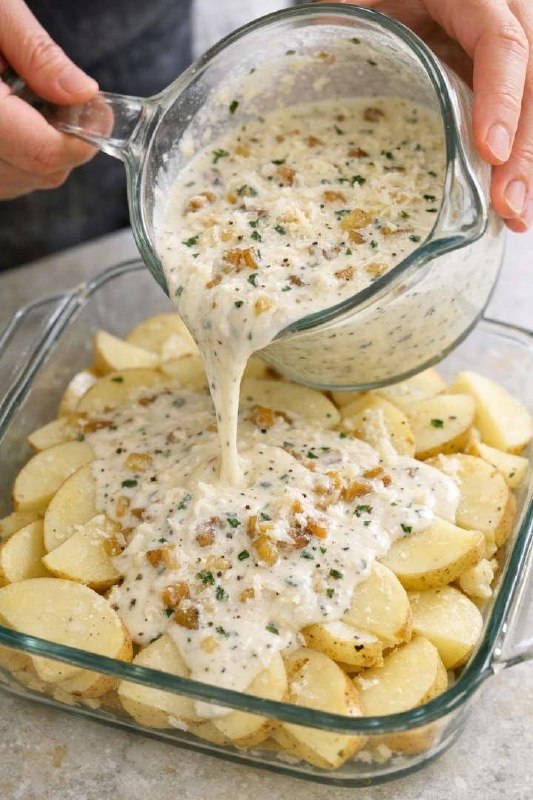
- Assemble the gratin: Arrange a single layer of thinly sliced potatoes in the bottom of the prepared casserole dish, slightly overlapping them.
- Pour about one-third of the creamy cheese sauce evenly over the potato layer.
- Repeat the layering process: Add another layer of potatoes, followed by another third of the sauce.
- Finish with the remaining potatoes, creating a final layer. Pour the last of the sauce evenly over the top, making sure all potatoes are well-covered.
- Sprinkle the remaining 1/2 cup of shredded Gruyere cheese and 1/4 cup of shredded Parmesan cheese over the top of the dish.
- Cover the casserole dish tightly with aluminum foil.
- Bake for 45 minutes. Then, remove the foil and continue baking for another 25-35 minutes, or until the potatoes are fork-tender and the top is golden brown and bubbly. If the top is browning too quickly, you can loosely tent it with foil.
- Once baked, remove the dish from the oven. Let it rest for at least 10-15 minutes before serving. This resting period allows the sauce to set and makes for cleaner slices.
- Garnish with fresh chopped parsley, if desired, and serve warm.
Cooking Tips and Variations
Achieving a truly spectacular potato gratin hinges on a few key techniques and considerations. First and foremost, the evenness of your potato slices is paramount. A mandoline slicer is your best friend here, ensuring each slice is uniformly thin, which guarantees even cooking and a tender, melt-in-your-mouth texture throughout the dish. If you don’t have a mandoline, a very sharp chef’s knife and careful, consistent slicing are essential. Avoid slices that are too thick, as they will take longer to cook and may result in an unevenly textured final product. On the other hand, slices that are too thin can become mushy. Aim for about 1/8 inch thickness for the perfect balance.
When preparing the creamy sauce, take your time with the roux. Cooking the flour with the butter for at least a minute helps to eliminate any raw flour taste and ensures a smooth, well-thickened sauce. Gradually adding the milk and cream while whisking continuously is crucial to prevent lumps. A smooth sauce is the foundation of a luxurious gratin. Don’t be afraid to season generously; potatoes are notoriously bland on their own and absorb a lot of flavor. Taste the sauce before adding it to the potatoes and adjust salt and pepper as needed. The nutmeg might seem like a small addition, but it adds a subtle warmth and depth that complements the potatoes and cheese beautifully.
For a richer flavor, consider infusing the milk and cream with aromatics before making the sauce. You can gently warm the milk and cream with a bay leaf, a few sprigs of fresh thyme, or a smashed garlic clove, then strain them out before proceeding with the sauce recipe. This adds another layer of complexity without much extra effort. Another tip for extra flavor is to lightly sauté the sliced potatoes in a little butter before layering. This adds a nutty, caramelized note, though it does add an extra step to the preparation.
To ensure a perfectly golden and bubbly top, resist the urge to uncover the dish too early during baking. The initial covered bake allows the potatoes to steam and become tender in the creamy liquid. Removing the foil for the final baking phase is when the magic happens, allowing the cheese to melt, bubble, and form that irresistible crust. If your oven tends to brown things quickly, keep a close eye on it and tent loosely with foil if necessary to prevent burning while the potatoes finish cooking through. Always test for doneness by inserting a knife or fork into the center of the dish; it should slide in with very little resistance.
Variations for this dish are endless, allowing you to customize it to your taste. For the cheese, while Gruyere and Parmesan are classic choices for their nutty and salty notes, feel free to experiment. Sharp cheddar, Fontina, or even a blend of Monterey Jack and Colby can offer different flavor profiles. For a smoky twist, a touch of smoked Gouda would be delicious. If you prefer a vegetarian option, this recipe already fits the bill. For a vegan version, substitute plant-based milk (such as unsweetened oat or cashew milk), vegan butter, and your favorite vegan shredded cheese. You might need to adjust the flour amount slightly to achieve the desired sauce thickness, as plant milks can vary in consistency.
To add more vegetables, thinly sliced leeks or caramelized onions can be layered with the potatoes, adding a sweet and savory depth. A sprinkle of fresh thyme or rosemary added to the sauce or layered with the potatoes will also enhance the aromatic profile. For a heartier dish, you could incorporate cooked, crumbled bacon or diced ham into the layers. If you like a bit of a kick, a pinch of cayenne pepper or a dash of hot sauce in the sauce can provide a subtle warmth. Finally, don’t overlook the importance of letting the gratin rest before serving. This allows the sauce to thicken and set, preventing it from running all over the plate and making it much easier to cut into neat, beautiful portions.
Storage and Reheating
This potato gratin is excellent for making ahead or enjoying as leftovers. To store, allow the baked gratin to cool completely to room temperature. Once cooled, cover the casserole dish tightly with plastic wrap or aluminum foil, or transfer individual portions to airtight containers. It will keep fresh in the refrigerator for up to 3-4 days. You can also freeze leftover gratin for longer storage. To freeze, divide the cooled gratin into individual freezer-safe containers or wrap tightly in plastic wrap and then foil. It can be frozen for up to 2-3 months. Thaw frozen gratin in the refrigerator overnight before reheating.
For reheating, there are a few good options depending on the portion size and desired crispness. If reheating a large portion or the entire dish, preheat your oven to 350°F (175°C). Cover the dish loosely with aluminum foil to prevent the top from drying out or burning. Bake for 20-30 minutes, or until heated through and bubbly. For individual servings, you can reheat them in the microwave. Place a portion on a microwave-safe plate, cover loosely, and heat on medium power for 2-4 minutes, stirring halfway through, until hot. While convenient, the microwave won’t give you the crispy top. For a crisper top on individual servings, you can reheat them in a toaster oven or air fryer at 350°F (175°C) for 10-15 minutes, or until heated through and the cheese is re-crisped.
Frequently Asked Questions
What kind of potatoes are best for potato gratin?
Waxy or medium-starch potatoes like Yukon Gold are generally considered the best for potato gratin. They hold their shape well when thinly sliced and cooked, and their creamy texture when tender is ideal for this dish. Russet potatoes can also be used, but they tend to be starchier and can sometimes lead to a slightly gummier texture if not handled correctly. Avoid very starchy potatoes if you want distinct layers.
Can I prepare this dish ahead of time?
Yes, this potato gratin is an excellent make-ahead dish. You can assemble the entire gratin, including layering the potatoes and pouring the sauce, up to 24 hours in advance. Cover it tightly with plastic wrap and refrigerate. When ready to bake, remove it from the refrigerator about 30-60 minutes before baking to allow it to come closer to room temperature. You may need to add an extra 10-15 minutes to the initial covered baking time if baking directly from cold.
Why did my gratin turn out watery or soupy?
There are a few reasons why your gratin might be watery. One common cause is not cooking the sauce long enough to thicken properly. Ensure your roux is well-cooked and the milk/cream mixture has simmered to a noticeable thickness before adding the cheese. Another reason could be using potatoes with too high a water content or not letting the dish rest sufficiently after baking. The resting period is crucial for the sauce to set and be absorbed by the potatoes. Also, ensure your casserole dish isn’t overcrowded with too many potatoes, which can release excess moisture.
How can I make the top extra crispy and golden?
To achieve an extra crispy and golden top, ensure you remove the foil for the last 25-35 minutes of baking. If your gratin isn’t browning enough, you can increase the oven temperature to 400°F (200°C) for the last 10-15 minutes, or even briefly turn on the broiler (watching it very closely to prevent burning!). Sprinkling a little extra Parmesan cheese on top during the last stage of baking can also help create a beautiful, crunchy crust.