
Rustic No Knead Rosemary Garlic Bread – Crispy Crust, Soft Interior, and Incredible Flavor with Minimal Effort
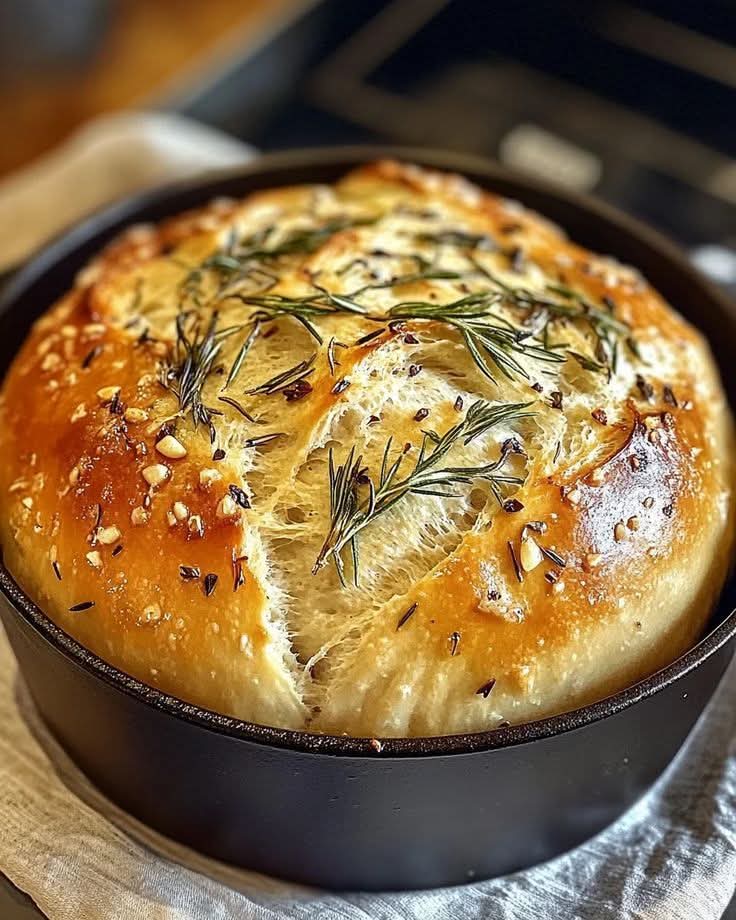
Few things are as satisfying as baking your own bread, especially when it requires almost no work and delivers bakery-style results. Rustic No Knead Rosemary Garlic Bread is one of those magical recipes that feels too good to be true. With a deeply golden, crackly crust, a soft and airy interior, and the irresistible aroma of roasted garlic and fresh rosemary, this bread proves that great homemade bread doesn’t need complicated techniques or hours of hands-on time. It’s the kind of loaf that makes your kitchen smell amazing and instantly elevates any meal it’s served with.
No knead bread became popular for a reason. By using time instead of effort, the dough develops gluten naturally during a long, slow rise. This creates incredible texture and flavor without kneading. When you add fragrant rosemary and savory garlic to the mix, the result is a rustic loaf that tastes like it came straight from an artisan bakery. Perfect for beginners and experienced bakers alike, this bread is ideal for serving with soups, stews, pasta, or simply dipped into olive oil.
Why You’ll Love This Rustic No Knead Rosemary Garlic Bread
No kneading required, perfect for beginners
Crispy artisan-style crust with a soft, airy crumb
Bold garlic and rosemary flavor in every bite
Minimal ingredients with maximum flavor
Perfect for soups, sandwiches, and dipping
Naturally vegan and budget-friendly
Ingredients for Rustic No Knead Rosemary Garlic Bread
3 cups all-purpose flour
3 cloves garlic, minced
1 1/2 cups warm water
1 teaspoon active dry yeast
1 1/2 teaspoons salt
1 to 2 tablespoons fresh rosemary, finely chopped or 1 teaspoon dried rosemary
1 tablespoon olive oil (optional, for added flavor)
Optional Add-Ins
Cracked black pepper
Grated Parmesan cheese
Roasted garlic instead of raw
Olive oil and sea salt for topping
Equipment Needed
Large mixing bowl
Wooden spoon or spatula
Plastic wrap or clean kitchen towel
Dutch oven with lid or heavy oven-safe pot
Parchment paper
How No Knead Bread Works
Traditional bread relies on kneading to develop gluten. No knead bread uses hydration and time instead. A wetter dough combined with a long fermentation allows gluten strands to form naturally. This slow process also improves flavor, giving the bread a subtle tang and complex depth that’s hard to achieve with quick-rise methods. Baking the bread in a covered Dutch oven traps steam, which is essential for creating that signature crisp crust and beautiful rise.
Step-by-Step Instructions for No Knead Rosemary Garlic Bread
Step 1: Mix the Dough
In a large mixing bowl, combine flour, salt, yeast, and chopped rosemary. Add the minced garlic and stir to distribute evenly. Pour in the warm water and olive oil if using. Stir with a wooden spoon until a shaggy, sticky dough forms. Do not overmix. The dough should look rough and slightly wet.
Step 2: Long Rise
Cover the bowl tightly with plastic wrap or a kitchen towel. Let the dough rise at room temperature for 12 to 18 hours. During this time, the dough will double in size and develop bubbles on the surface. This slow fermentation is what creates the bread’s structure and flavor.
Step 3: Shape the Dough
Lightly flour your work surface. Turn the dough out gently and fold it over itself once or twice to form a rough ball. Do not knead. Place the dough seam-side down on a piece of parchment paper and let it rest for 30 to 45 minutes while the oven heats.
Step 4: Preheat the Oven and Pot
Place a Dutch oven with its lid into the oven and preheat to 450°F (230°C). Heating the pot is crucial for creating steam and achieving a crispy crust.
Step 5: Bake the Bread
Carefully remove the hot Dutch oven from the oven. Lift the parchment paper with the dough and place it into the pot. Cover with the lid and bake for 30 minutes. Remove the lid and bake for an additional 10 to 15 minutes until the bread is deep golden brown with a crisp crust.
Step 6: Cool Before Slicing
Remove the bread from the pot and place it on a wire rack. Let it cool for at least 30 minutes before slicing. Cutting too early can result in a gummy interior.
Tips for the Best No Knead Rosemary Garlic Bread
Use fresh rosemary for the most aromatic flavor
Do not rush the rise, longer fermentation equals better bread
A sticky dough is normal and necessary
Always preheat the Dutch oven
Let the bread cool fully for the best texture
Flavor Variations to Try
Cheesy Garlic Bread: Add grated Parmesan or mozzarella to the dough
Olive Rosemary Bread: Mix in chopped olives for a Mediterranean twist
Roasted Garlic Version: Roast garlic cloves before adding for a sweeter, milder flavor
Whole Wheat Option: Replace up to 1 cup of flour with whole wheat flour and add extra water if needed
How to Serve Rosemary Garlic Bread
Serve warm with butter or olive oil
Pair with soups, stews, or chili
Use for grilled cheese or panini sandwiches
Toast and top with avocado or tomatoes
Serve alongside pasta dishes
Storage and Make-Ahead Tips
Store the bread at room temperature wrapped loosely in a towel for up to 2 days. For longer storage, wrap tightly and freeze for up to 2 months. To reheat, place in a 350°F oven for 10 minutes to refresh the crust. Avoid storing in airtight plastic bags at room temperature, as this softens the crust.
Common Mistakes to Avoid
Using too much flour when shaping
Skipping the Dutch oven
Underbaking the loaf
Cutting while still hot
Using water that is too hot for the yeast
Frequently Asked Questions
Can I make this bread without a Dutch oven?
Yes, but a Dutch oven gives the best crust. You can use a heavy oven-safe pot or bake on a stone with a pan of water for steam.
Why is my dough so sticky?
No knead dough is meant to be wet. This moisture creates the open crumb and airy texture.
Can I reduce the garlic?
Yes, adjust to taste, but garlic mellows as it bakes.
Is this bread vegan?
Yes, it contains no dairy or eggs.
Conclusion
Rustic No Knead Rosemary Garlic Bread is proof that incredible homemade bread doesn’t require complicated steps or professional skills. With just a bowl, a spoon, and a little patience, you can create a crusty, flavorful loaf that rivals anything from an artisan bakery. The combination of fragrant rosemary and savory garlic makes this bread unforgettable, whether served as a side, used for sandwiches, or enjoyed on its own. Once you try this recipe, it’s almost guaranteed to become a regular part of your baking routine, especially when you want maximum reward with minimal effort.