
Introduction
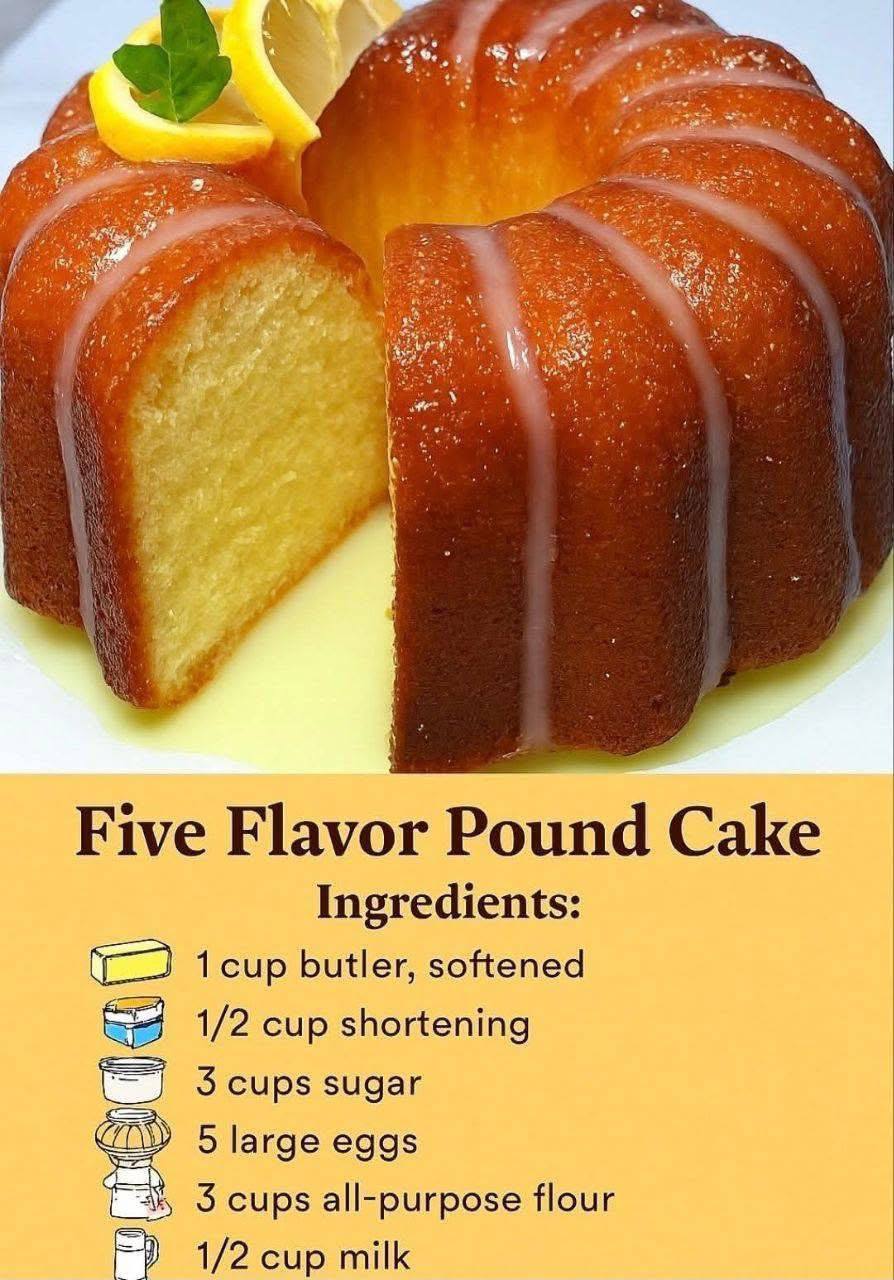
There’s something undeniably comforting and timeless about a classic pound cake. Its dense, buttery crumb, golden crust, and rich aroma evoke memories of simpler times and cherished family gatherings. But if you’re looking to elevate that beloved classic to a whole new level of deliciousness, allow us to introduce you to the “Five Flavor Pound Cake.” This traditional Southern variation takes everything you love about pound cake and infuses it with an exquisite symphony of tastes that will tantalize your taste buds and leave everyone craving another slice.
So, what exactly makes it “five flavor”? This delightful cake typically harmonizes five distinct extracts: vanilla, almond, lemon, butter, and either coconut or rum. The result is not just a cake, but an experience – a moist, incredibly rich, and surprisingly nuanced dessert with a beautiful golden exterior and a tender, fine crumb within. Topped with a simple yet elegant glaze and perhaps a garnish of fresh lemon and mint, this Five Flavor Pound Cake is more than just a dessert; it’s a statement. Perfect for holiday tables, potlucks, celebratory brunches, or simply as a special indulgence with your afternoon coffee, this cake promises to be a showstopper and a new family favorite.
Our recipe guides you through creating a pound cake that truly embodies its name, delivering a perfect balance of these five iconic flavors. You can expect a cake that is wonderfully dense yet never dry, with that signature golden crust that promises a delightful chew. The simple glaze adds just the right touch of sweetness and moisture, making each bite an absolute dream. Get ready to impress your guests and treat yourself to a slice of pure Southern comfort with this irresistible Five Flavor Pound Cake.
Nutritional Information
Per serving (approximate values, based on 16 servings):
- Calories: 450 kcal
- Protein: 5g
- Carbohydrates: 58g
- Fat: 23g
- Fiber: 1g
- Sodium: 250mg
Ingredients
- 1 cup (2 sticks) unsalted butter, softened
- 1/2 cup vegetable shortening
- 3 cups granulated sugar
- 5 large eggs, at room temperature
- 3 cups all-purpose flour, sifted
- 1/2 cup whole milk, at room temperature
- 2 teaspoons vanilla extract
- 1 teaspoon almond extract
- 1 teaspoon lemon extract
- 1 teaspoon butter extract (optional, but highly recommended for depth)
- 1 teaspoon coconut extract OR rum extract
- 1/2 teaspoon salt
- Non-stick baking spray with flour, or butter and flour for greasing the pan
- For the Glaze:
- 2 cups powdered sugar, sifted
- 3-4 tablespoons milk or lemon juice
- 1/2 teaspoon vanilla extract
- For Garnish (Optional):
- Lemon slices or wedges
- Fresh mint sprigs
Instructions
- Prepare Your Pan: Preheat your oven to 325°F (160°C). Generously grease and flour a 10-12 cup bundt pan. Ensure every crevice is coated to prevent sticking. You can use a non-stick baking spray with flour, or apply softened butter and then dust thoroughly with flour, tapping out any excess.
- Cream Fats and Sugar: In a large mixing bowl, using an electric mixer, cream together the softened butter and vegetable shortening on medium-high speed for 3-5 minutes, until light and fluffy. Gradually add the granulated sugar, about 1/2 cup at a time, beating well after each addition. Continue to beat for another 5-7 minutes, scraping down the sides of the bowl occasionally, until the mixture is very light in color and airy. This creaming step is crucial for the cake’s texture.
- Add Eggs: Add the eggs one at a time, beating well after each addition until fully incorporated. Scrape down the sides of the bowl as needed. The mixture may look slightly curdled at this stage, but don’t worry.
- Combine Dry Ingredients: In a separate medium bowl, whisk together the sifted all-purpose flour and salt.
- Alternate Wet and Dry: With the mixer on low speed, begin adding the flour mixture to the butter mixture in three additions, alternating with the milk in two additions. Start and end with the flour. For example, add 1/3 of the flour, mix until just combined, then add 1/2 of the milk, mix, then 1/3 of the flour, mix, then the remaining milk, mix, and finally the last 1/3 of the flour, mixing until just combined. Be careful not to overmix the batter once the flour is added, as this can lead to a tough cake.
- Add the Five Flavors: Stir in the vanilla extract, almond extract, lemon extract, butter extract (if using), and coconut or rum extract. Mix until just incorporated.
- Fill the Pan: Pour the batter evenly into the prepared bundt pan. Smooth the top with a spatula. Gently tap the pan on the counter a couple of times to release any air bubbles.
- Bake: Bake for 60-75 minutes, or until a wooden skewer or toothpick inserted into the center of the cake comes out clean. The top should be golden brown and spring back when lightly touched.
- Cool the Cake: Once baked, remove the cake from the oven and let it cool in the bundt pan on a wire rack for 15-20 minutes. This allows the cake to set and prevents it from breaking when inverted.
- Invert and Cool Completely: After 15-20 minutes, carefully invert the cake onto the wire rack to cool completely. This can take 1-2 hours. Do not glaze a warm cake, as the glaze will simply melt and run off.
- Prepare the Glaze: While the cake cools, prepare the glaze. In a medium bowl, whisk together the sifted powdered sugar, 3 tablespoons of milk or lemon juice, and 1/2 teaspoon vanilla extract until smooth. If the glaze is too thick, add more milk/lemon juice a teaspoon at a time until it reaches a pourable but still thick consistency. If it’s too thin, whisk in a little more powdered sugar.
- Glaze the Cake: Once the cake is completely cool, place the wire rack over a baking sheet (to catch drips). Slowly drizzle the glaze over the top of the cake, allowing it to drip down the sides. You can do this in layers if you prefer a thicker coating.
- Garnish and Serve: Let the glaze set for about 15-20 minutes. Garnish with fresh lemon slices or wedges and mint sprigs if desired. Slice and serve!
Cooking Tips and Variations
Room Temperature Ingredients are Key: This is perhaps the most crucial tip for any pound cake. Ensure your butter, shortening, eggs, and milk are all at room temperature. This allows them to emulsify properly, creating a smooth, homogenous batter that traps air efficiently, resulting in a lighter, more tender crumb. Cold ingredients will lead to a lumpy batter and a denser, less desirable cake texture.
Proper Pan Preparation Prevents Disaster: Nothing is more frustrating than a delicious cake sticking to the pan. Take your time to generously grease and flour your bundt pan. Use softened butter or shortening to coat every ridge and crevice, then dust with flour, rotating the pan and tapping out any excess. For extra insurance, a baking spray that contains flour works wonderfully. A well-prepared pan ensures your beautiful cake releases effortlessly.
Don’t Overmix the Batter: Once you add the flour, mix the batter only until the ingredients are just combined. Overmixing develops gluten in the flour, which can lead to a tough, chewy cake. A light hand here ensures a tender, fine crumb.
Baking Low and Slow: Pound cakes are baked at a lower temperature (325°F) for a longer duration compared to many other cakes. This allows the cake to bake through evenly without drying out the edges or over-browning the crust. Resist the urge to open the oven door frequently, especially during the first 45 minutes, as this can cause the cake to sink.
The Importance of Cooling: Allow the cake to cool in the pan for 15-20 minutes before inverting it onto a wire rack. This period allows the cake to firm up and prevents it from breaking apart when you remove it. Then, cool the cake completely on the wire rack before applying the glaze. Glazing a warm cake will cause the glaze to melt into a sticky mess rather than forming a beautiful, set coating.
Glaze Consistency is Customizable: The glaze should be thick enough to cling to the cake but thin enough to drizzle. If your glaze is too thick, add more milk or lemon juice a teaspoon at a time. If it’s too thin, whisk in more powdered sugar until you reach the desired consistency. Lemon juice in the glaze adds a lovely tart counterpoint to the sweet cake.
Flavor Variations: While the “five flavors” are traditional, feel free to experiment. You could swap out the coconut or rum extract for orange extract, maple extract, or even a hint of cardamom. For a more intense lemon flavor, add 1-2 teaspoons of fresh lemon zest to the batter along with the liquid extracts. A touch of orange zest would also be delightful. For a chocolate version, you could add cocoa powder to some of the flour and use coffee extract as one of your five flavors. Seasonal variations are also fun; think pumpkin spice extract in the fall.
Serving Suggestions: This Five Flavor Pound Cake is magnificent on its own, but it also pairs wonderfully with fresh berries (strawberries, raspberries, blueberries), a dollop of freshly whipped cream, or a scoop of vanilla bean ice cream. A light fruit compote made with peaches or cherries would also complement its rich flavors beautifully.
Troubleshooting a Dry Cake: If your cake turns out dry, it’s usually due to overbaking or too much flour. Ensure you measure flour correctly (spoon into cup, then level off) and use a kitchen scale for precision if possible. Always check for doneness with a toothpick and remove the cake promptly when it comes out clean, but before it starts to over-brown.
Storage and Reheating
Storage:
- At Room Temperature: This Five Flavor Pound Cake, especially with its glaze, stores beautifully at room temperature. Once the glaze has set, place the cake under a cake dome or in an airtight container. It will stay fresh and moist for 3-4 days. For best results, avoid direct sunlight or warm environments.
- In the Refrigerator: While not strictly necessary for short-term storage, you can refrigerate the cake to extend its freshness, especially in warm climates. Wrap the completely cooled and glazed cake tightly in plastic wrap, then place it in an airtight container. It will keep well for up to a week. Be aware that refrigeration can sometimes slightly alter the texture, making it a bit denser.
- Freezing: Pound cake freezes exceptionally well, making it perfect for preparing ahead or saving leftovers.
- Whole Cake: Ensure the cake is completely cooled and the glaze is fully set. Wrap the entire cake tightly in several layers of plastic wrap, then an additional layer of aluminum foil.
- Slices: For convenience, you can slice the cake before freezing. Place parchment paper between each slice, then wrap the stack tightly in plastic wrap and foil.
- Frozen pound cake can be stored for up to 3 months.
Reheating:
- From Room Temperature/Refrigerated: If the cake has been refrigerated, allow it to come to room temperature for about 30-60 minutes before serving for the best flavor and texture. You can also warm individual slices slightly in the microwave for 15-30 seconds, or in a preheated oven at 250°F (120°C) for 5-10 minutes, until just warm through. Be careful not to overheat, as this can dry out the cake.
- From Frozen:
- Whole Cake: Transfer the wrapped frozen cake to the refrigerator and let it thaw overnight (8-12 hours). Once thawed, bring it to room temperature for an hour or so before serving.
- Individual Slices: You can thaw individual slices in the refrigerator for a few hours, or quickly warm them from frozen. For quick warming, microwave a slice for 30-60 seconds, or toast it lightly in a toaster oven.
- Avoid thawing a whole cake at room temperature, as this can lead to condensation and a soggy exterior.
Frequently Asked Questions
What does “Five Flavor” mean in a pound cake?
The “Five Flavor” in a pound cake refers to the traditional inclusion of five distinct flavor extracts: vanilla, almond, lemon, butter, and either coconut or rum extract. This combination creates a complex and rich flavor profile that is more nuanced than a simple vanilla pound cake, making it a beloved Southern classic. The “butter” flavor can come from a butter extract or is simply enhanced by the generous amount of real butter in the recipe.
Why did my pound cake come out dense or dry?
A dense pound cake is often the result of overmixing the batter once the flour has been added, which develops too much gluten. It can also be caused by using cold ingredients, which don’t emulsify properly. A dry cake is typically due to overbaking; ensure you check for doneness with a toothpick and remove the cake from the oven promptly once it comes out clean. Accurate measurement of flour is also critical; too much flour will make the cake dry.
Can I make this cake without shortening?
While shortening contributes to the cake’s classic dense yet tender crumb and helps it rise, you can substitute it with an equal amount of unsalted butter. However, be aware that replacing shortening entirely with butter may result in a slightly different texture – potentially a little less tender and with a slightly more pronounced buttery flavor. If you do use all butter, make sure it’s at room temperature and cream it very well with the sugar.
How can I prevent my bundt cake from sticking to the pan?
Preventing a bundt cake from sticking is crucial. The key is thorough pan preparation. Use a non-stick baking spray that contains flour, or generously grease the entire inside of the pan with softened butter or shortening, ensuring every crevice is coated. Then, dust the pan thoroughly with all-purpose flour, rotating it and tapping out any excess. For best results, do this right before pouring in the batter, and allow the cake to cool in the pan for 15-20 minutes before attempting to invert it.