

Introduction
Prepare to be swept away by a symphony of flavors and textures with our Creamy Garlic Salmon with Rice and Broccoli! This dish isn’t just a meal; it’s a culinary experience that brings together the rich, flaky goodness of salmon, the vibrant crunch of perfectly cooked broccoli, and a luscious, garlicky cream sauce that will have you licking the plate clean. It’s the kind of comforting, yet elegant, dinner that feels special enough for a weekend gathering but is surprisingly simple to whip up on a busy weeknight. Get ready to add a new favorite to your recipe repertoire!
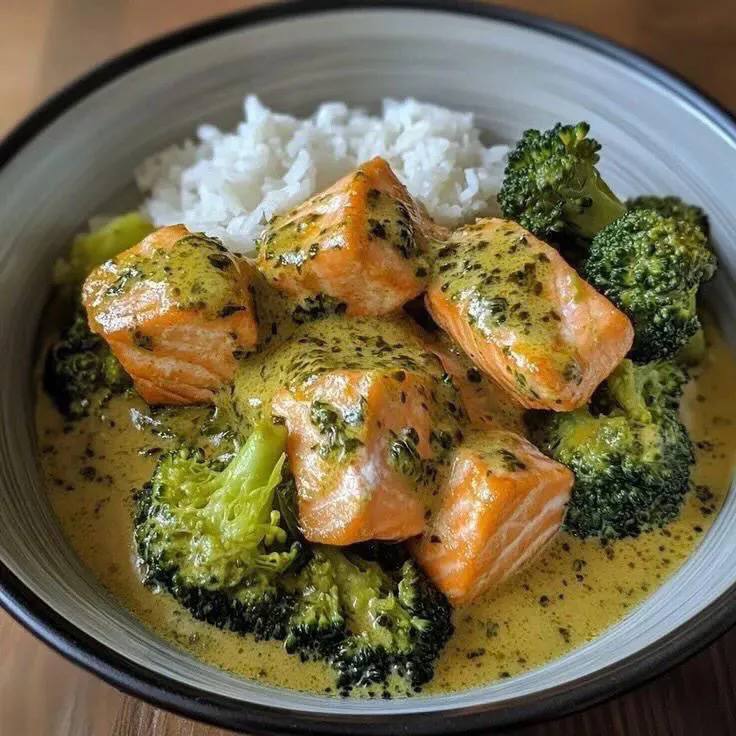
What makes this Creamy Garlic Salmon truly irresistible is the harmonious blend of its components. The salmon, pan-seared to perfection, boasts a beautifully browned exterior and a tender, moist interior, easily flaking apart. It’s then generously coated in a decadent sauce that’s bursting with aromatic garlic and fresh herbs, offering a luxurious mouthfeel without being overly heavy. Paired with fluffy white rice that soaks up every drop of that incredible sauce and bright, tender-crisp broccoli florets, this dish delivers a balanced and incredibly satisfying plate that appeals to both the eyes and the palate. It’s a complete meal in one, offering protein, healthy fats, complex carbohydrates, and essential vitamins.
This recipe is designed for maximum flavor with minimal fuss. We’ll guide you through each step to ensure your salmon is perfectly cooked, your broccoli retains its vibrant color and bite, and your creamy garlic sauce is nothing short of spectacular. Whether you’re a seasoned home cook or just starting your culinary journey, you’ll find this recipe approachable and rewarding. So, tie on your apron, gather your ingredients, and let’s create a memorable meal that promises to impress!
Nutritional Information
Per serving (approximate values):
- Calories: 680
- Protein: 45g
- Carbohydrates: 55g
- Fat: 32g
- Fiber: 6g
- Sodium: 650mg
Ingredients
- 1.5 lbs salmon fillets, skinless, cut into 1.5-inch chunks
- 2 cups white rice (Jasmine or Basmati recommended)
- 4 cups fresh broccoli florets
- 2 tablespoons olive oil, divided
- 1 teaspoon salt, divided, plus more to taste
- 0.5 teaspoon black pepper, divided, plus more to taste
- 6 cloves garlic, minced
- 0.5 medium yellow onion, finely diced (about 0.5 cup)
- 1.5 cups heavy cream
- 0.75 cup chicken or vegetable broth
- 0.25 cup fresh parsley, finely chopped
- 2 tablespoons fresh chives, finely chopped
- 1 tablespoon fresh dill, finely chopped (optional, but recommended)
- 1 tablespoon lemon juice (freshly squeezed)
- 0.5 teaspoon turmeric powder (for color and subtle flavor, optional)
- 1 tablespoon cornstarch mixed with 2 tablespoons cold water (slurry, optional, for thicker sauce)
Instructions
- Prepare the Rice: Rinse the white rice under cold water until the water runs clear. In a medium saucepan, combine 2 cups of rice with 3.5 cups of water (or according to package directions). Add 0.5 teaspoon of salt. Bring to a boil, then reduce heat to low, cover, and simmer for 15-18 minutes, or until all water is absorbed and rice is tender. Remove from heat and let stand, covered, for 5 minutes before fluffing with a fork.
- Prepare the Broccoli: While the rice is cooking, steam the broccoli florets. Place broccoli in a steamer basket over 1 inch of boiling water. Cover and steam for 4-6 minutes, or until tender-crisp and vibrant green. Alternatively, you can roast them: Toss with 1 tablespoon olive oil, salt, and pepper, then roast at 400°F (200°C) for 10-15 minutes until tender with slight char. Set aside.
- Prepare and Cook the Salmon: Pat the salmon chunks dry with paper towels. Season evenly with 0.5 teaspoon salt and 0.25 teaspoon black pepper. Heat 1 tablespoon olive oil in a large skillet or non-stick pan over medium-high heat. Once the oil is shimmering, add the salmon chunks in a single layer, being careful not to overcrowd the pan. You may need to cook in batches. Sear for 2-3 minutes per side, until golden brown and cooked through (internal temperature should reach 145°F or 63°C). Remove the salmon from the skillet and set aside on a plate.
- Make the Creamy Garlic Sauce: Reduce the heat to medium-low. Add the remaining 1 tablespoon of olive oil to the same skillet. Add the finely diced yellow onion and sauté for 3-4 minutes, or until softened and translucent. Add the minced garlic and sauté for another 1-2 minutes until fragrant, being careful not to burn it.
- Pour in the heavy cream and chicken or vegetable broth. Stir well, scraping up any browned bits from the bottom of the pan. If using, stir in the turmeric powder. Bring the sauce to a gentle simmer, then reduce heat to low and let it simmer for 5-7 minutes, stirring occasionally, until it slightly thickens.
- If you prefer a thicker sauce, whisk in the cornstarch slurry and simmer for another 1-2 minutes until the desired consistency is reached.
- Combine and Finish the Dish: Remove the sauce from the heat. Stir in the fresh parsley, chives, and dill (if using). Add the lemon juice and stir to combine. Taste the sauce and adjust seasonings (salt and pepper) as needed.
- Gently fold the cooked salmon chunks and steamed broccoli florets into the creamy garlic sauce. Toss carefully to coat all the pieces without breaking up the salmon too much.
- Serve: To serve, spoon a generous portion of the fluffy white rice onto each plate or into bowls. Top with the creamy garlic salmon and broccoli mixture. Garnish with a sprinkle of extra fresh herbs if desired. Serve immediately and enjoy!
Cooking Tips and Variations
Achieving culinary perfection with this Creamy Garlic Salmon recipe is easier than you think, especially with a few insider tips and creative variations. The key to a truly outstanding dish lies in the details, from ingredient selection to cooking techniques.
Tips for Best Results:
- Don’t Overcook the Salmon: This is perhaps the most crucial tip. Salmon cooks quickly, and overcooking will result in dry, tough fish. Aim for an internal temperature of 145°F (63°C). The salmon should be flaky but still moist. A good visual cue is when the flesh turns opaque throughout. If you’re incorporating the salmon into the sauce, sear it slightly less initially as it will finish cooking in the warm sauce.
- Pat Salmon Dry: Before searing, always pat your salmon fillets or chunks thoroughly dry with paper towels. This removes surface moisture, allowing for a better sear and a beautiful golden-brown crust.
- Use Fresh Herbs: While dried herbs can be used in a pinch, fresh parsley, chives, and dill make a significant difference in the flavor and aroma of the creamy sauce. They add brightness and a vibrant color that dried herbs simply cannot replicate.
- Adjust Sauce Consistency: The amount of broth and cream can be adjusted to your preference. If you like a thinner sauce, add a splash more broth. For a thicker sauce, simmer it a bit longer or use the optional cornstarch slurry. Remember, the sauce will thicken slightly as it cools.
- Don’t Crowd the Pan: When searing the salmon, cook it in batches if necessary. Crowding the pan lowers the temperature and steams the fish instead of searing it, preventing that desirable crust.
- Tender-Crisp Broccoli: Avoid overcooking the broccoli. It should be bright green and offer a slight resistance when bitten, not mushy. Steaming or blanching are excellent methods for achieving this texture. If roasting, keep a close eye on it.
- Deglaze the Pan: After searing the salmon, the browned bits (fond) left in the pan are packed with flavor. When you add the onion and then the liquids for the sauce, make sure to scrape these bits up with a wooden spoon or spatula; they will dissolve into the sauce, adding incredible depth.
Recipe Variations:
- Different Fish: While salmon is fantastic, this creamy garlic sauce would also pair wonderfully with other firm white fish like cod, halibut, or even shrimp. Adjust cooking times accordingly.
- Cream Alternatives: For a dairy-free version, use full-fat coconut milk (canned, not from a carton) or a plant-based heavy cream substitute. The coconut milk will impart a subtle tropical flavor, which can be quite delicious. For a lighter sauce, you can use half-and-half or even evaporated milk, though the richness will be reduced.
- Vegetable Swaps: Instead of broccoli, consider using asparagus, green beans, spinach, or even bell peppers. Add them to the sauce at the end or steam/roast them separately.
- Spice it Up: For a bit of heat, add a pinch of red pepper flakes along with the garlic. A dash of smoked paprika can also add a lovely depth of flavor and color.
- Cheesy Goodness: Stir in a tablespoon or two of grated Parmesan cheese into the sauce at the very end for an extra layer of savory flavor.
- Lemon Zest: For an even brighter, more aromatic sauce, add a teaspoon of lemon zest along with the lemon juice. The zest contains essential oils that enhance the citrus flavor.
- Herbal Twist: Experiment with different fresh herbs. Thyme, oregano, or even a touch of fresh basil can offer unique flavor profiles.
- One-Pan Meal Adaptation: To minimize dishes, you can often cook the salmon and then build the sauce in the same pan. Once the sauce is ready, gently stir in pre-steamed broccoli. This method streamlines cleanup, though you’ll still need a separate pot for the rice.
- Different Grains: Instead of white rice, serve this dish with brown rice, quinoa, couscous, or even a creamy polenta for a different textural experience.
Storage and Reheating
Proper storage and reheating are key to enjoying your Creamy Garlic Salmon with Rice and Broccoli leftovers while maintaining their delicious flavor and texture. Salmon, in particular, can become dry if not handled correctly during reheating.
Storage:
- Cool Completely: Before storing, allow the dish to cool down to room temperature. This prevents condensation from forming inside the container, which can lead to sogginess and promote bacterial growth. Do not leave it out for more than two hours.
- Airtight Containers: Transfer the salmon, broccoli, and rice mixture into airtight containers. You can store them together or separately, depending on your preference. Storing them separately can sometimes help maintain the texture of each component better.
- Refrigerate Promptly: Store the sealed containers in the refrigerator for up to 2-3 days. While salmon can sometimes last a bit longer, it’s best to consume it within this timeframe for optimal taste and safety.
- Freezing (Not Recommended for Best Quality): While technically possible, freezing this dish is generally not recommended, especially for the creamy sauce. Dairy-based sauces can sometimes separate or become grainy after thawing, and cooked salmon can become dry and develop a less desirable texture. If you must freeze, store the salmon and broccoli separately from the sauce if possible. Freeze in an airtight, freezer-safe container for up to 1 month. Thaw overnight in the refrigerator before reheating.
Reheating:
- Microwave (Quickest, but use caution): This is the fastest method, but it can easily overcook the salmon and dry out the rice.
- Place a single serving of the dish on a microwave-safe plate.
- Add a tablespoon or two of water or broth over the rice and sauce to help create steam and prevent drying.
- Cover the plate loosely with a microwave-safe lid or damp paper towel.
- Heat on medium power for 1-2 minutes, then check. Continue heating in 30-second intervals until warmed through. Avoid high power, as it’s more likely to dry out the salmon.
- Stovetop (Best for Sauce and Salmon): This method is ideal for gently reheating the creamy sauce and salmon, helping to restore its original texture.
- Transfer the desired portion of the dish to a non-stick skillet or saucepan.
- Add a splash of milk, cream, or broth (1-2 tablespoons per serving) to help rehydrate the sauce and prevent it from becoming too thick or breaking.
- Heat over low to medium-low heat, stirring gently and occasionally, until warmed through. Be careful not to boil the sauce rapidly, as this can cause it to separate or become oily.
- If the rice was stored separately, you can add it to the pan at the end to warm through with the sauce, or reheat it separately.
- Oven (Good for Larger Batches, less prone to drying than microwave):
- Preheat your oven to 275-300°F (135-150°C).
- Place the leftovers in an oven-safe dish.
- Add a tablespoon or two of water or broth to the dish and cover tightly with aluminum foil.
- Heat for 15-20 minutes, or until warmed through. The foil helps to trap moisture and prevent the salmon from drying out.
Tips for Reheating:
- Low and Slow: Regardless of the method, reheating on lower heat settings for a longer time is always better than high heat for a short time, especially for salmon and creamy sauces.
- Add Moisture: Always add a little extra liquid (water, broth, milk, or cream) when reheating to prevent drying out the rice and thickening of the sauce.
- Stir Gently: When reheating on the stovetop or in the microwave, stir the dish gently to ensure even heating and to prevent the salmon from breaking apart too much.
- Check Temperature: Ensure the food is heated to an internal temperature of 165°F (74°C) for food safety.
Frequently Asked Questions
Can I prepare parts of this meal ahead of time?
Absolutely! You can prepare the rice a day in advance and store it in an airtight container in the refrigerator. The broccoli can also be steamed or roasted a day ahead and refrigerated. The creamy garlic sauce base (without the herbs or lemon juice) can be made ahead and stored, then gently reheated and finished with fresh herbs and lemon juice just before serving. This makes weeknight cooking much faster.
What can I do if my creamy garlic sauce is too thin or too thick?
If your sauce is too thin, you have a couple of options. You can simmer it uncovered over low heat for a few more minutes to allow some of the liquid to evaporate and thicken naturally. Alternatively, prepare a cornstarch slurry (1 tablespoon cornstarch mixed with 2 tablespoons cold water) and whisk it into the simmering sauce, letting it cook for 1-2 minutes until thickened to your desired consistency. If the sauce is too thick, simply whisk in a splash of chicken broth, milk, or cream until it reaches your preferred consistency.
How do I ensure my salmon is perfectly cooked and not dry?
The key to perfectly cooked salmon is to avoid overcooking. Salmon is done when it easily flakes with a fork and reaches an internal temperature of 145°F (63°C). When searing, cook for 2-3 minutes per side for 1.5-inch thick pieces. If you’re unsure, use an instant-read thermometer. Also, remember to pat the salmon dry before searing to achieve a better crust, and don’t overcrowd the pan, which can lead to steaming rather than searing.