
Introduction
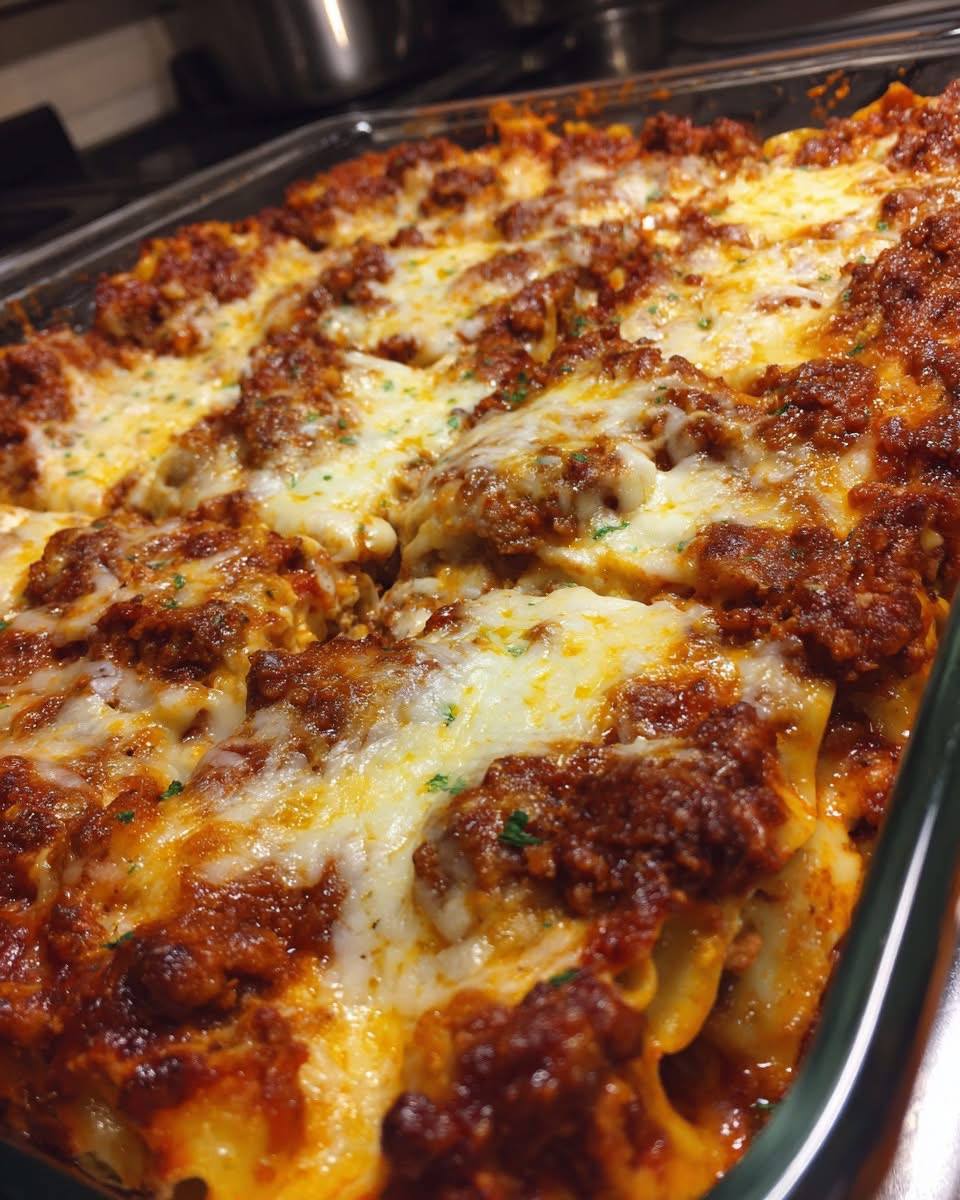
There are some dishes that just speak to your soul, wrapping you in a warm, comforting embrace with every single bite. For me, that dish is lasagna. And I’m not talking about just any lasagna; I’m talking about this cheesy lasagna. The one that, once you make it, you’ll find yourself craving again and again. It’s a classic for a reason, a true testament to the power of simple, honest ingredients coming together in a symphony of flavor and texture. This isn’t a fancy, Michelin-star type of meal, but it’s the kind of food that brings people together, makes memories, and leaves everyone feeling utterly content.
Lasagna holds a special place in the pantheon of comfort foods, a dish celebrated globally for its rich layers of pasta, savory meat sauce, and an abundance of gooey, melted cheese. Its popularity stems from its ability to satisfy on so many levels – the hearty meat, the tender pasta, the creamy cheese, and the vibrant tomato all contribute to an experience that is both deeply familiar and incredibly indulgent. Whether it’s a quiet weeknight dinner or a bustling family gathering, a well-made lasagna is always a welcome sight, promising warmth, flavor, and a generous slice of happiness. This particular recipe elevates the classic, focusing on a truly exceptional cheese blend and a robust, slow-simmered meat sauce that will have you reaching for seconds before you’ve even finished your first.
What makes this cheesy lasagna special, you ask? It’s all in the balance. We’re talking about perfectly al dente pasta sheets, a deeply flavorful meat sauce that has simmered to perfection, and layers upon layers of three distinct cheeses: creamy ricotta, stretchy mozzarella, and sharp Parmesan, all melting together into a golden, bubbly crust. The result is a lasagna that is rich without being heavy, savory without being overpowering, and undeniably cheesy in the best possible way. This recipe is designed to guide you through each step, ensuring that even if you’ve “only made this cheesy lasagna once,” it’ll be a masterpiece you’ll want to recreate time and time again. Forget dry, bland lasagnas; this one is pure, unadulterated comfort food bliss.
Nutritional Information
Per serving (approximate values):
- Calories: 650
- Protein: 45g
- Carbohydrates: 50g
- Fat: 30g
- Fiber: 5g
- Sodium: 950mg
Ingredients
- 1 tablespoon olive oil
- 1.5 pounds lean ground beef (or a blend of beef and Italian sausage)
- 1 large yellow onion, finely chopped
- 3 cloves garlic, minced
- 1 (28 ounce) can crushed tomatoes
- 2 (15 ounce) cans tomato sauce
- 2 tablespoons tomato paste
- 1/2 cup beef broth (or red wine for richer flavor)
- 2 teaspoons dried oregano
- 1 teaspoon dried basil
- 1/2 teaspoon red pepper flakes (optional, for a little kick)
- 1 teaspoon sugar (to balance acidity)
- Salt and freshly ground black pepper, to taste
- 15 ounces ricotta cheese, whole milk preferred
- 1 large egg, lightly beaten
- 1/2 cup grated Parmesan cheese, plus more for topping
- 1/4 cup chopped fresh parsley
- 1/2 teaspoon salt
- 1/4 teaspoon black pepper
- 12-15 lasagna noodles, oven-ready or classic (if classic, pre-cook according to package directions)
- 1 pound (about 4 cups) shredded mozzarella cheese
Instructions
- Prepare the Meat Sauce: Heat the olive oil in a large pot or Dutch oven over medium heat. Add the ground beef and cook, breaking it up with a spoon, until thoroughly browned. Drain off any excess grease.
- Add the chopped onion to the pot and cook until softened, about 5-7 minutes. Stir in the minced garlic and cook for another minute until fragrant.
- Stir in the crushed tomatoes, tomato sauce, tomato paste, beef broth (or red wine), oregano, basil, red pepper flakes (if using), and sugar. Bring the sauce to a simmer, then reduce the heat to low, cover, and let it cook for at least 30 minutes, or up to 2 hours, stirring occasionally. The longer it simmers, the more flavorful it will be. Season with salt and pepper to taste.
- Prepare the Cheese Filling: While the sauce simmers, in a medium bowl, combine the ricotta cheese, beaten egg, 1/2 cup grated Parmesan cheese, fresh parsley, 1/2 teaspoon salt, and 1/4 teaspoon black pepper. Mix until well combined.
- Preheat Oven and Prepare Noodles: Preheat your oven to 375°F (190°C). If using classic lasagna noodles, cook them according to package directions until al dente. Drain and rinse with cold water to prevent sticking. If using oven-ready noodles, no pre-cooking is required.
- Assemble the Lasagna: Spread about 1 cup of meat sauce on the bottom of a 9×13 inch baking dish. This prevents the noodles from sticking.
- Arrange a layer of 3-4 lasagna noodles over the sauce, slightly overlapping if necessary.
- Spread half of the ricotta cheese mixture evenly over the noodles.
- Top the ricotta layer with about 1.5 cups of meat sauce.
- Sprinkle about 1.5 cups of shredded mozzarella cheese over the meat sauce.
- Repeat the layers: noodles, remaining ricotta mixture, meat sauce, and mozzarella.
- Add a final layer of noodles, then cover generously with the remaining meat sauce.
- Sprinkle the remaining shredded mozzarella cheese and a good dusting of Parmesan cheese over the top.
- Bake the Lasagna: Cover the baking dish tightly with aluminum foil. Bake for 25 minutes.
- Remove the foil and continue baking for another 20-25 minutes, or until the cheese is bubbly and golden brown. If you like a very browned top, you can briefly place it under the broiler for 1-2 minutes (watch carefully to prevent burning).
- Rest Before Serving: This is crucial! Let the lasagna rest for at least 15-20 minutes after taking it out of the oven. This allows the layers to set, making it much easier to slice and serve without everything falling apart.
- Slice into generous portions and serve hot.
Cooking Tips and Variations
For the best results with your cheesy lasagna, start with high-quality ingredients. A good quality ground beef or a mix with Italian sausage will lend a richer flavor to your sauce. Don’t rush the sauce-simmering process; the longer it cooks, the more developed and delicious the flavors will become. If you have the time, make the meat sauce a day ahead. The flavors will meld and deepen overnight, resulting in an even more spectacular lasagna. When it comes to the noodles, if you’re using classic lasagna noodles, ensure they are cooked al dente, meaning they still have a slight bite. Overcooked noodles can lead to a mushy lasagna. Oven-ready noodles are a fantastic time-saver, but ensure your sauce has enough liquid to hydrate them properly.
To enhance the cheesiness, consider adding a thin layer of béchamel sauce (a white sauce made with butter, flour, and milk) as an additional layer. This will add an extra creaminess and richness that is absolutely divine. For a vegetarian option, simply omit the meat and load up on sautéed vegetables like spinach, mushrooms, zucchini, and bell peppers. You can also experiment with different cheese blends; provolone or fontina can be wonderful additions to the mozzarella and Parmesan. If you like a little heat, increase the red pepper flakes in the sauce, or add a pinch of cayenne pepper to the ricotta mixture. For an herbier flavor, finely chop some fresh basil and add it to the cheese mixture or sprinkle it over the top after baking.
Another tip for a truly great lasagna is to ensure your cheese filling isn’t too wet. Draining the ricotta cheese for an hour or two in a fine-mesh sieve can help remove excess moisture, preventing a watery lasagna. Also, resist the urge to cut into the lasagna immediately after it comes out of the oven. Letting it rest for at least 15-20 minutes allows the layers to set and the cheese to firm up slightly, making for cleaner, more beautiful slices. This resting period is crucial for the structural integrity of your lasagna.
Storage and Reheating
Proper storage is key to enjoying your delicious lasagna for days to come. Once cooled completely, cover any leftover lasagna tightly with plastic wrap or aluminum foil. It can be stored in the refrigerator for up to 3-4 days. For longer storage, lasagna freezes exceptionally well. You can freeze individual portions or the entire dish. To freeze, wrap cooled slices tightly in plastic wrap, then an additional layer of aluminum foil. For a whole dish, cover tightly with several layers of plastic wrap and then foil. Frozen lasagna will keep for up to 2-3 months.
Reheating is straightforward. From the refrigerator, individual slices can be reheated in the microwave until hot, or in the oven at 350°F (175°C) for 20-30 minutes, covered with foil, until heated through. For a whole lasagna, cover with foil and reheat in the oven at 350°F (175°C) for 30-45 minutes, or until the center is hot. If reheating from frozen, it’s best to thaw it in the refrigerator overnight first. If reheating from frozen directly, bake at 350°F (175°C), covered, for about 1 hour to 1 hour 15 minutes, then uncover for the last 15-20 minutes to crisp up the top. Always ensure the internal temperature reaches 165°F (74°C) for safe consumption.
Frequently Asked Questions
Can I make this lasagna ahead of time?
Absolutely! Lasagna is an excellent make-ahead meal. You can assemble the entire lasagna up to 24 hours in advance, cover it tightly with plastic wrap, and store it in the refrigerator. When you’re ready to bake, let it sit at room temperature for about 30 minutes before baking as directed, adding an extra 10-15 minutes to the covered baking time.
Why is my lasagna watery?
A watery lasagna can be caused by a few factors. The most common culprits are too much moisture in the ricotta cheese (drain it beforehand!), a sauce that’s too thin, or not letting the lasagna rest after baking. The resting period is crucial for the liquids to reabsorb and the layers to set, preventing a soupy outcome.
Do I need to boil the lasagna noodles first?
It depends on the type of noodles you buy. If you are using “oven-ready” or “no-boil” lasagna noodles, you do not need to pre-cook them. If you are using traditional dried lasagna noodles, you will need to boil them according to the package directions until they are al dente before assembling the lasagna.
Can I use different types of meat?
Yes, you can absolutely customize the meat in your lasagna! While ground beef is classic, a blend of ground beef and Italian sausage (sweet or hot) adds wonderful depth of flavor. Ground turkey or chicken can also be used for a lighter version, though you might need to adjust seasoning to enhance their flavor.