

Introduction
Imagine a warm, golden-brown loaf, fresh from the oven, its crust subtly crisp, yielding to a soft, fluffy interior brimming with savory goodness. That, my friends, is the magic of homemade stuffed bread! It’s a culinary hug, a comforting classic that effortlessly combines the joy of freshly baked bread with the irresistible allure of a hearty, flavorful filling. This isn’t just any bread; it’s a complete experience, perfect for a cozy family dinner, a casual get-together with friends, or even a satisfying snack on the go. The aroma alone will have everyone gravitating towards your kitchen, eager to slice into this delicious creation.
Our recipe today focuses on a truly spectacular version: a delicious homemade stuffed bread generously filled with savory ham and melty cheese. This combination is a timeless favorite for a reason – the salty, smoky notes of the ham perfectly complement the creamy, tangy richness of the cheese, all encased in a tender, slightly sweet yeast dough. What makes this recipe truly special is its versatility and satisfying nature. It’s hearty enough to be a meal in itself, yet elegant enough to serve as an impressive appetizer or a standout addition to any brunch spread. Forget bland store-bought options; once you taste the superior flavor and texture of homemade, you’ll never look back.
Making bread from scratch might seem intimidating to some, but I promise you, this recipe is incredibly approachable, even for novice bakers. There’s an undeniable satisfaction that comes from transforming simple ingredients into something truly extraordinary with your own hands. From the moment the yeast awakens and the dough begins to rise, to the final golden-brown masterpiece emerging from your oven, every step is a rewarding experience. So, roll up your sleeves, gather your ingredients, and prepare to fill your home with the incredible aroma of freshly baked bread. This simple yet impressive recipe is guaranteed to become a cherished favorite in your kitchen, bringing smiles and deliciousness to every bite.
Nutritional Information
Per serving (approximate values):
- Calories: 350
- Protein: 18g
- Carbohydrates: 35g
- Fat: 15g
- Fiber: 2g
- Sodium: 650mg
Ingredients
- 3 cups (360g) all-purpose flour, plus more for dusting
- 1 packet (2 ¼ teaspoons) active dry yeast
- 1 tablespoon granulated sugar
- 1 teaspoon salt
- 1 cup (240ml) warm water (105-115°F / 40-46°C)
- 2 tablespoons olive oil, plus more for greasing
- 1 large egg, beaten (for egg wash)
- 1 teaspoon dried Italian seasoning or dried oregano
- 8 ounces (about 1.5 cups) cooked ham, finely diced or shredded
- 8 ounces (about 2 cups) shredded mozzarella cheese, or a blend of mozzarella and cheddar
Instructions
- In a large mixing bowl, combine the warm water, granulated sugar, and active dry yeast. Stir gently and let it sit for 5-10 minutes, or until the mixture becomes foamy. This indicates that the yeast is active and ready to work its magic.
- Once the yeast is foamy, add the olive oil, salt, and 1 cup of the all-purpose flour to the bowl. Mix with a wooden spoon until well combined.
- Gradually add the remaining 2 cups of flour, one cup at a time, mixing until a shaggy dough forms.
- Turn the dough out onto a lightly floured surface. Knead the dough for 8-10 minutes. Use the heel of your hand to push the dough away from you, then fold it back over itself, rotating slightly. Continue this motion until the dough is smooth, elastic, and no longer sticky. It should spring back when gently poked.
- Lightly grease a clean large bowl with a little olive oil. Place the kneaded dough in the bowl, turning it once to coat the entire surface with oil. Cover the bowl tightly with plastic wrap or a clean kitchen towel.
- Let the dough rise in a warm, draft-free place for 1 to 1.5 hours, or until it has doubled in size. This process is called the first proofing.
- While the dough is rising, prepare your filling. In a medium bowl, combine the finely diced or shredded ham and the shredded mozzarella cheese. Toss gently to ensure an even distribution of ingredients.
- Once the dough has doubled in size, gently punch it down to release the air. Turn the dough out onto a lightly floured surface.
- Using a rolling pin, roll the dough into a large rectangle, approximately 12×18 inches (30×45 cm) and about ¼ inch (0.6 cm) thick. Try to keep the edges as straight as possible for easier rolling.
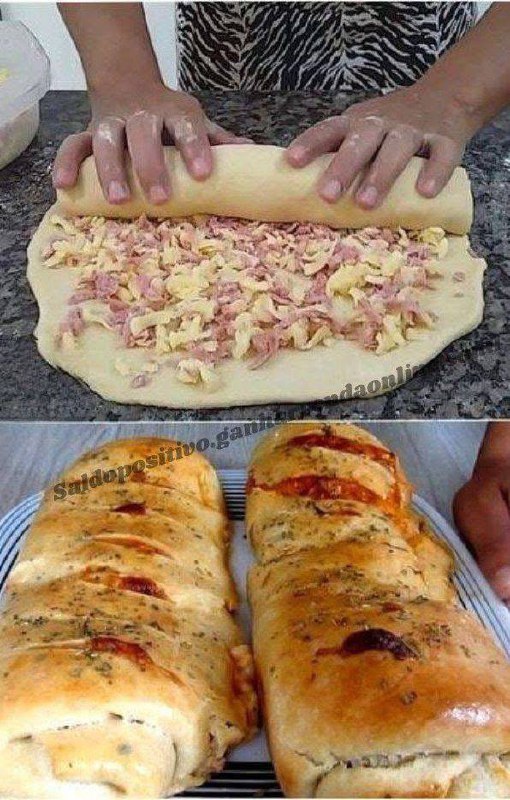
- Evenly spread the ham and cheese mixture over the entire surface of the rolled-out dough, leaving a small 1-inch border clear along one of the long edges. This border will help seal the bread.
- Starting from the long edge opposite the clear border, carefully and tightly roll the dough up into a log. Aim for a snug roll to prevent large air pockets.
- Once rolled, pinch the seam along the bottom edge securely to seal the bread. Also, pinch the ends of the log to prevent any filling from escaping during baking.
- Carefully transfer the stuffed bread log to a baking sheet lined with parchment paper.
- Cover the baking sheet loosely with plastic wrap or a clean kitchen towel and let the bread rise again in a warm place for another 30-45 minutes, or until it has noticeably puffed up (the second proofing).
- Preheat your oven to 375°F (190°C) during the last 15 minutes of the second rise.
- In a small bowl, whisk the beaten egg with 1 tablespoon of water to create an egg wash.
- Using a pastry brush, gently brush the entire surface of the risen bread log with the egg wash. This will give it a beautiful golden crust.
- Sprinkle the dried Italian seasoning or oregano evenly over the top of the bread. If desired, you can also make a few shallow diagonal slits across the top of the loaf with a sharp knife (about ½ inch deep) for a decorative touch and to help steam escape.
- Bake the stuffed bread in the preheated oven for 30-35 minutes, or until it is golden brown on top and sounds hollow when tapped on the bottom. The internal temperature should reach 200-210°F (93-99°C) if you use a thermometer.
- Once baked, remove the bread from the oven and transfer it to a wire rack. Let it cool for at least 15-20 minutes before slicing and serving. This resting time allows the filling to set and makes for cleaner slices.
Cooking Tips and Variations
For the best results, always ensure your yeast is fresh and active. If your water isn’t warm enough, the yeast won’t activate, and if it’s too hot, it will kill the yeast. Aim for a temperature that feels like a warm bath on your wrist. When kneading, don’t be afraid to get your hands in there; the more you knead, the more gluten develops, resulting in a chewier, more satisfying bread. If your dough feels too sticky, add a tiny bit more flour, a tablespoon at a time, until it’s workable but still soft. Conversely, if it’s too dry, add a teaspoon of water. A warm, draft-free spot for rising can be achieved by preheating your oven to its lowest setting for a few minutes, then turning it off and placing the covered dough inside. This creates an ideal environment for the yeast to thrive.
When it comes to rolling out the dough, a light dusting of flour on your surface and rolling pin is key. Avoid using too much flour, as it can make the dough tough. Try to keep the rectangle as even as possible to ensure uniform slices when baked. The tighter you roll the dough with the filling, the better the structure of your finished bread will be, and you’ll avoid large gaps. Pinching the seams securely is crucial to prevent the delicious filling from oozing out during baking. If you’re having trouble with the ends, you can fold them inward slightly before pinching them closed. For an extra golden and shiny crust, don’t skip the egg wash. The herbs on top not only add flavor but also a beautiful visual appeal, making your homemade bread look truly professional.
The beauty of stuffed bread lies in its endless possibilities for variations. While ham and cheese are a classic, feel free to get creative with your fillings. For a delightful Italian twist, try a pepperoni and mozzarella filling with a sprinkle of dried basil and a touch of tomato paste spread thinly on the dough before adding the cheese. A spinach and feta version, perhaps with a touch of garlic and sun-dried tomatoes, offers a Mediterranean flair. Cooked sausage and peppers (drained well to prevent a soggy bread) make for a heartier, more robust option. For a breakfast-inspired bread, consider cooked crumbled bacon, scrambled eggs, and cheddar cheese. You could even venture into sweet territory with a cinnamon sugar and cream cheese filling, turning it into a delectable dessert or breakfast pastry. Remember to ensure any wet fillings are well-drained to prevent the bread from becoming soggy. This bread is fantastic served warm, sliced into thick pieces, either on its own, alongside a bowl of soup, or as an impressive appetizer at your next gathering. It’s also wonderful for breakfast or brunch, providing a satisfying start to the day.
Storage and Reheating
To store any leftover homemade stuffed bread, first ensure it has completely cooled down to room temperature. Once cool, wrap the bread tightly in plastic wrap, then place it in an airtight container or a large, sealable plastic bag. Stored this way, the bread will stay fresh at room temperature for 1-2 days. If you need to store it for longer, you can refrigerate it for up to 3-4 days. For optimal freshness and to extend its shelf life, consider freezing the bread. Wrap individual slices or the entire cooled loaf tightly in plastic wrap, then an additional layer of aluminum foil. It can be frozen for up to 2-3 months.
When reheating, if the bread was stored at room temperature or refrigerated, you can gently warm slices in a toaster oven or a conventional oven. For an oven, preheat to 300°F (150°C), place the slices on a baking sheet, and heat for 5-10 minutes, or until warmed through and the cheese is melty again. If reheating from frozen, it’s best to thaw the bread in the refrigerator overnight or on the counter for a few hours. Once thawed, reheat using the oven method described above. Alternatively, individual slices can be microwaved for 30-60 seconds, though this may result in a softer crust. For the best texture, especially if you froze it, oven reheating is highly recommended as it helps crisp up the crust and remelt the cheese beautifully, making it taste almost as good as fresh baked.
Frequently Asked Questions
Can I make the dough ahead of time?
Yes, you can definitely prepare the dough in advance! After the first rise, punch down the dough, form it into a ball, and place it in a lightly oiled bowl. Cover it tightly with plastic wrap and refrigerate for up to 24 hours. When you’re ready to bake, remove the dough from the refrigerator and let it come to room temperature for about 30-60 minutes before proceeding with rolling it out and adding the filling.
What if my dough isn’t rising?
If your dough isn’t rising, the most common culprits are inactive yeast or an incorrect water temperature. Double-check the expiration date on your yeast. If it’s old, it may have lost its potency. Ensure your water is warm (105-115°F / 40-46°C); water that’s too cold won’t activate the yeast, and water that’s too hot will kill it. Also, make sure your rising environment is warm and draft-free. If after an hour there’s no noticeable change, your yeast might be dead, and you may need to start over with fresh yeast.
Can I add other vegetables to the filling?
Absolutely! Adding vegetables can enhance both flavor and nutrition. Good options include finely diced bell peppers, sautéed onions, mushrooms, or spinach. If using vegetables with high water content, like spinach or mushrooms, it’s crucial to sauté them first to remove excess moisture. This prevents the bread from becoming soggy. Allow them to cool completely before mixing with the ham and cheese.
How do I prevent the filling from leaking out?
To prevent the filling from leaking, ensure you roll the dough tightly when forming the log and pinch the seam along the bottom securely. Also, take extra care to pinch the ends of the log closed. Don’t overfill the bread, as this can make it difficult to seal properly. Leaving a small clear border on one long edge of the dough before rolling also helps create a strong seal.