
Introduction
There’s a certain magic that happens when warm, sweet apples meet a soft, cake-like batter, especially when it’s crowned with a glistening glaze. That, my friends, is the irresistible allure of apple fritters. They evoke cozy autumn mornings, bustling farmers’ markets, and the comforting scent of home baking. Traditionally, these delightful treats are deep-fried, resulting in a crispy exterior and a tender interior that’s truly divine. However, the thought of deep-frying can be daunting for many home cooks – the mess, the oil disposal, and let’s be honest, the added calories. But what if you could capture all that incredible flavor and satisfying texture without the fuss and guilt of frying?
Enter our baked apple fritters! This recipe offers a fantastic alternative to the classic fried version, delivering all the warmth, sweetness, and apple-infused goodness you crave, but with a lighter touch. By baking these fritters, we cut down on the fat content and eliminate the splattering oil, making for a much cleaner and easier cooking experience. You’ll still achieve a beautifully golden-brown exterior and a remarkably soft, tender interior studded with sweet apple pieces, all finished with a simple, decadent glaze. It’s the perfect harmony of indulgence and practicality, proving that you don’t need a deep fryer to achieve pure fritter bliss.
Get ready to transform simple pantry staples and fresh, crisp apples into a batch of homemade treats that will have everyone asking for more. Whether you’re looking for a delightful breakfast, a comforting dessert, or a special snack, these baked apple fritters are guaranteed to hit the spot. We’ll guide you through every step, from selecting the perfect apples to crafting the ideal batter and baking them to golden perfection, all culminating in that sweet, sweet glaze. Prepare to fall in love with the easier, healthier, and just as delicious world of baked apple fritters!
Nutritional Information
Per serving (approximate values):
- Calories: 280
- Protein: 4g
- Carbohydrates: 45g
- Fat: 10g
- Fiber: 2g
- Sodium: 180mg
Ingredients
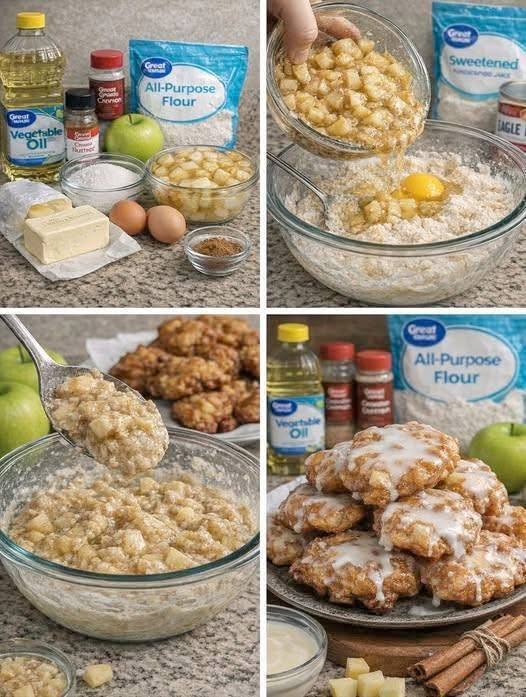
- 2 cups (240g) all-purpose flour
- 1/2 cup (100g) granulated sugar
- 2 teaspoons baking powder
- 1 teaspoon ground cinnamon
- 1/4 teaspoon ground nutmeg
- 1/2 teaspoon salt
- 1 large egg, lightly beaten
- 1/2 cup (120ml) milk (whole or 2%)
- 1 teaspoon vanilla extract
- 1/4 cup (56g) unsalted butter, melted and cooled slightly
- 2 medium apples (about 1.5 cups chopped), firm and tart like Granny Smith or Honeycrisp, peeled, cored, and finely diced
- 1 tablespoon vegetable oil (for greasing the baking sheet)
For the Glaze:
- 1 cup (120g) powdered sugar
- 2-3 tablespoons sweetened condensed milk
- 1-2 tablespoons milk (as needed for desired consistency)
- 1/2 teaspoon vanilla extract (optional)
Instructions
- Preheat your oven to 375°F (190°C). Line a large baking sheet with parchment paper or a silicone baking mat, then lightly grease it with 1 tablespoon of vegetable oil. This helps prevent sticking and promotes a nice golden bottom.
- In a large mixing bowl, whisk together the all-purpose flour, granulated sugar, baking powder, ground cinnamon, ground nutmeg, and salt. Ensure there are no lumps and the dry ingredients are well combined.
- In a separate medium bowl, whisk together the lightly beaten egg, 1/2 cup milk, and 1 teaspoon vanilla extract.
- Pour the wet ingredients into the dry ingredients. Add the melted and slightly cooled butter to the mixture. Stir gently with a spoon or spatula until just combined. Be careful not to overmix; a few small lumps in the batter are perfectly fine and will lead to a more tender fritter. Overmixing develops the gluten in the flour, resulting in tough fritters.
- Gently fold in the finely diced apples until they are evenly distributed throughout the batter. Again, avoid overmixing.
- Using two spoons or a small ice cream scoop (about 1.5-2 tablespoons per fritter), drop rounded spoonfuls of the batter onto the prepared baking sheet. Leave about 1-2 inches of space between each fritter to allow for spreading. You should get approximately 12-15 fritters depending on their size.
- Bake for 15-20 minutes, or until the fritters are golden brown around the edges, puffed up, and a toothpick inserted into the center comes out clean. The exact baking time may vary depending on your oven and the size of your fritters.
- While the fritters are baking, prepare the glaze. In a small bowl, whisk together the powdered sugar, 2 tablespoons of sweetened condensed milk, and 1 tablespoon of regular milk. Add more regular milk, a teaspoon at a time, until you reach your desired consistency – it should be thick enough to coat a spoon but still pourable. If using, stir in the optional 1/2 teaspoon vanilla extract.
- Once the fritters are baked, remove them from the oven and let them cool on the baking sheet for 5 minutes. This allows them to firm up slightly.
- Transfer the warm fritters to a wire cooling rack placed over a sheet of parchment paper or foil (to catch any drips). While the fritters are still warm, generously drizzle or brush the glaze over them. The warmth of the fritters will help the glaze set beautifully. For a thicker coating, you can dip the tops of the fritters directly into the glaze.
- Allow the glaze to set for about 10-15 minutes before serving.
Cooking Tips and Variations
For the best baked apple fritters, choosing the right apple is key. Opt for firm, tart varieties like Granny Smith, Honeycrisp, Braeburn, or Fuji. These apples hold their shape well during baking and offer a delightful tart counterpoint to the sweetness of the batter and glaze. Avoid mealy or overly soft apples, as they can turn mushy. When dicing your apples, aim for small, uniform pieces (about 1/4 to 1/2 inch) to ensure they cook evenly and are distributed throughout the fritters. If you prefer a softer apple texture, you can lightly sauté the diced apples in a tablespoon of butter for 3-5 minutes before adding them to the batter.
The secret to tender fritters lies in gentle mixing. Overmixing the batter develops the gluten in the flour, leading to a tough, bready texture. Mix just until the wet and dry ingredients are combined, leaving a few lumps is perfectly fine. The same principle applies when folding in the apples; do it gently to avoid overworking the batter. For consistent fritter size and even baking, use an ice cream scoop or two spoons to portion the batter onto the baking sheet. Don’t crowd the pan, as the fritters need space to expand and brown properly.
Experiment with spices to customize your fritters. A pinch of ground ginger or allspice can add another layer of warmth to the classic cinnamon and nutmeg. For an extra boost of flavor, you can add a teaspoon of lemon zest to the batter, which brightens the apple flavor. Consider adding 1/4 cup of chopped walnuts or pecans to the batter for a delightful nutty crunch. If you enjoy dried fruit, a handful of raisins or dried cranberries can also be folded in. For a caramel apple twist, you could drizzle a little caramel sauce over the glaze before serving.
Adjusting the glaze consistency is important for the perfect finish. If your glaze is too thick, add a tiny bit more milk (1/2 teaspoon at a time) until it’s pourable. If it’s too thin, whisk in a tablespoon or two more powdered sugar until it reaches your desired thickness. Glaze the fritters while they are still warm, as this allows the glaze to melt slightly and adhere beautifully, creating a satisfying coating. Placing the cooling rack over parchment paper or foil makes for easy cleanup of any glaze drips.
Storage and Reheating
These baked apple fritters are best enjoyed fresh and warm, especially with that glistening glaze still soft. However, if you happen to have any leftovers (a rare occurrence!), they can be stored to preserve their deliciousness. Place cooled, glazed fritters in an airtight container at room temperature for up to 1 day. For longer storage, you can refrigerate them for up to 3-4 days. Be aware that the glaze may become slightly sticky or absorb into the fritters over time, especially in the refrigerator.
To reheat refrigerated fritters, the best method is to warm them gently in the oven or an air fryer. Preheat your oven to 300°F (150°C). Place the fritters on a baking sheet and heat for 5-7 minutes, or until just warmed through. If using an air fryer, set it to 300°F (150°C) and heat for 3-5 minutes. Reheating in a microwave is possible, but it can sometimes make the fritters a bit chewy, and the glaze might melt unevenly. If you do use a microwave, heat in short bursts (15-20 seconds) until warm. For fritters stored at room temperature, a quick zap in the microwave for 10-15 seconds might be all they need to regain some warmth and softness.
Frequently Asked Questions
Can I use different types of apples for this recipe?
While tart and firm apples like Granny Smith, Honeycrisp, or Braeburn are highly recommended for their flavor and ability to hold shape during baking, you can certainly experiment with other varieties. Softer apples like Gala or Golden Delicious will work, but they might become a bit more tender and less distinct within the fritter. If using sweeter apples, you might want to slightly reduce the amount of granulated sugar in the batter to maintain a balanced sweetness.
Can I make the batter ahead of time?
It’s generally best to bake the fritters shortly after mixing the batter. The baking powder in the batter starts to activate once it comes into contact with the wet ingredients, creating bubbles that give the fritters their light, airy texture. If the batter sits for too long, these leavening agents lose their potency, which can result in denser, flatter fritters. However, you can prepare the dry ingredients and chop the apples ahead of time, storing them separately. Then, simply combine the wet ingredients and fold everything together just before baking.
Why are my fritters not rising or are too dense?
There are a few common culprits for dense fritters. The most frequent reason is overmixing the batter. As mentioned, overmixing develops the gluten, leading to a tough texture. Mix only until the ingredients are just combined. Another reason could be expired baking powder; always check the date on your leavening agents. Lastly, ensuring your oven is properly preheated to the correct temperature is crucial, as a cold oven won’t provide the initial heat burst needed for optimal rise.
How can I make these fritters even healthier?
To make these fritters a bit healthier, you can make a few adjustments. You could substitute a portion of the all-purpose flour with whole wheat pastry flour for added fiber, though this might slightly alter the texture. Reducing the amount of granulated sugar in the batter by a tablespoon or two, especially if using naturally sweet apples, is another option. For the glaze, you could thin it with more milk instead of sweetened condensed milk, or even omit the glaze altogether and simply dust the warm fritters with a light sprinkle of powdered sugar and cinnamon.