

Introduction
Imagine waking up to the aroma of warm vanilla and cinnamon, knowing that a decadent, yet surprisingly simple, breakfast awaits. That’s the promise of Baked Custard French Toast, a dish that transforms ordinary bread into an extraordinary morning indulgence. Forget standing over a hot griddle, flipping individual slices; this oven-baked marvel handles the heavy lifting, allowing you to enjoy a leisurely morning while your breakfast bakes to golden perfection. It’s the ultimate weekend treat, a comforting classic that brings a touch of gourmet elegance to your kitchen without the fuss.
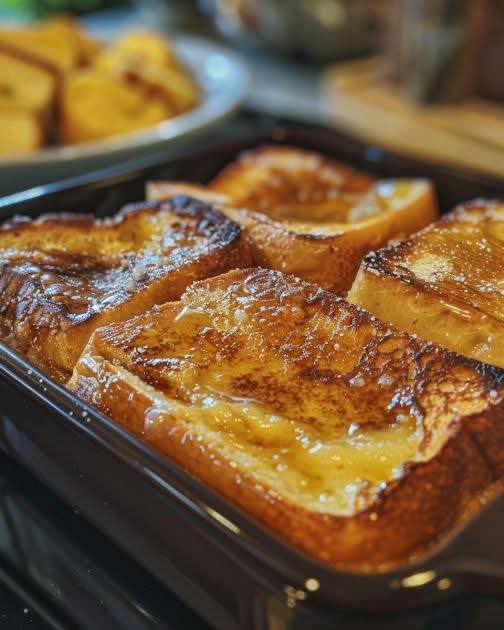
What makes this Baked Custard French Toast truly special is its incredible texture. Each slice boasts a perfectly golden-brown, lightly crisp exterior that gives way to a luxuriously soft, custardy interior. It’s like a warm hug in every bite, infused with the rich flavors of vanilla and a hint of spice. The magic lies in the generous soaking time, allowing the bread to fully absorb the rich egg and milk mixture, creating that melt-in-your-mouth experience that sets it apart from traditional pan-fried versions. This method not only deepens the flavor but also ensures every piece is evenly cooked and wonderfully moist.
Beyond its irresistible taste and texture, the “baked” aspect is a true game-changer. It means less active cooking for you, making it ideal for feeding a crowd or for those mornings when you crave something special but want to minimize effort. Plus, it’s a fantastic make-ahead dish, allowing you to assemble everything the night before and simply pop it in the oven when you’re ready. Drizzle with warm maple syrup, sprinkle with powdered sugar, or adorn with fresh berries for a breakfast that feels undeniably indulgent and utterly satisfying.
Nutritional Information
Per serving (approximate values):
- Calories: 450 kcal
- Protein: 18g
- Carbohydrates: 55g
- Fat: 18g
- Fiber: 3g
- Sodium: 450mg
Ingredients
- 1 loaf (1 pound) challah, brioche, or sturdy white bread, day-old preferred
- 6 large eggs
- 2 cups whole milk
- 1/2 cup heavy cream
- 1/2 cup granulated sugar
- 2 teaspoons vanilla extract
- 1 teaspoon ground cinnamon
- 1/4 teaspoon ground nutmeg
- 1/4 teaspoon salt
- 2 tablespoons unsalted butter, melted, plus extra for greasing the baking dish
- For serving: powdered sugar, maple syrup, fresh berries
Instructions
- Prepare the Bread: If using a whole loaf, slice the bread into 1-inch thick pieces. If your bread is already pre-sliced, ensure the slices are thick. Arrange the bread slices in a single layer in a lightly buttered 9×13 inch baking dish. You may need to overlap them slightly, or cut some pieces to fit snugly.
- Whisk the Custard: In a large bowl, whisk together the eggs until well beaten. Add the whole milk, heavy cream, granulated sugar, vanilla extract, cinnamon, nutmeg, and salt. Whisk vigorously until all ingredients are thoroughly combined and the sugar has dissolved.
- Soak the Bread: Carefully pour the custard mixture evenly over the bread slices in the baking dish, ensuring every piece is well saturated. Gently press down on the bread with a spatula to help it absorb the liquid.
- Chill (Optional, but Recommended): Cover the baking dish tightly with plastic wrap and refrigerate for at least 4 hours, or preferably overnight. This extended soaking time is crucial for achieving that deeply custardy interior.
- Preheat Oven & Prepare for Baking: When ready to bake, preheat your oven to 375°F (190°C). Remove the baking dish from the refrigerator and let it sit at room temperature for about 15-20 minutes while the oven preheats. Drizzle the melted butter evenly over the top of the soaked bread.
- Bake: Bake for 35-45 minutes, or until the French toast is golden brown on top, puffed, and the custard is set in the center. To check for doneness, insert a thin knife into the center; if it comes out clean, it’s ready. If the top is browning too quickly, you can loosely tent it with aluminum foil for the last 10-15 minutes of baking.
- Rest and Serve: Once baked, remove the dish from the oven and let it rest for 5-10 minutes before serving. This allows the custard to further set. Dust generously with powdered sugar and serve warm with plenty of maple syrup and fresh berries.
Cooking Tips and Variations
The secret to truly exceptional Baked Custard French Toast lies in a few key details and the willingness to experiment. First and foremost, the bread choice is paramount. While any sturdy bread will do, challah and brioche are highly recommended due to their rich, buttery flavor and robust texture. These breads hold up beautifully to the soaking process without becoming soggy, providing that perfect balance of crisp exterior and custardy interior. Day-old bread is always preferred because its slightly drier nature allows it to absorb more of the custard mixture, leading to a richer, more flavorful end product. If you only have fresh bread, you can lightly toast the slices in a low oven (around 250°F or 120°C) for 10-15 minutes to dry them out slightly before proceeding with the recipe. Another crucial tip is to avoid overcrowding your pan. Give the bread slices a little room to breathe; if they are packed too tightly, they won’t brown as evenly and the edges may remain soft instead of developing that desirable crispness. If you’re making a very large batch, consider using two baking dishes.
For an even more profound flavor and texture, don’t skimp on the soaking time. While 4 hours is good, an overnight soak in the refrigerator is truly transformative. This extended period allows the bread to fully imbibe the custard, ensuring every fiber is saturated, resulting in a more uniform and luscious custardy texture from edge to center. When it comes to customization, the possibilities are endless. To elevate the spice profile, consider adding a pinch of cardamom or a touch of allspice to the custard mixture. A teaspoon of orange or almond extract can also introduce a wonderful aromatic note. For a richer, deeper flavor, you can brown the butter before drizzling it over the French toast prior to baking – the nutty aroma of browned butter complements the sweetness beautifully. If you’re a fan of chocolate, sprinkle some chocolate chips between the bread layers before soaking, or add them on top during the last 10 minutes of baking. For a fruity twist, scatter fresh or frozen berries over the top before baking, or layer thin slices of apples or pears.
Another popular variation is to create a streusel topping. Combine 1/2 cup all-purpose flour, 1/4 cup brown sugar, 1/4 teaspoon cinnamon, and 4 tablespoons cold butter cut into small pieces. Use your fingers to rub the butter into the dry ingredients until crumbly, then sprinkle this mixture over the French toast before baking for an added layer of crunch and sweetness. For a truly decadent experience, consider adding a cream cheese swirl. Soften 4 ounces of cream cheese and beat it with 2 tablespoons of sugar and 1 teaspoon of vanilla extract until smooth. Dollop spoonfuls over the soaked bread before baking and swirl gently with a knife. This adds a tangy, creamy element that pairs wonderfully with the sweet custard. Remember to always adjust baking time if you add substantial moisture or density with additional toppings.
Storage and Reheating
Baked Custard French Toast is a fantastic dish for meal prepping or enjoying leftovers, as it reheats beautifully. To store any uneaten portions, allow the French toast to cool completely to room temperature. Once cooled, transfer the slices to an airtight container. You can layer them with parchment paper to prevent sticking. Store in the refrigerator for up to 3-4 days. For longer storage, Baked Custard French Toast freezes exceptionally well. Once cooled, wrap individual slices tightly in plastic wrap, then place them in a freezer-safe bag or container. It can be stored in the freezer for up to 2-3 months. Thaw overnight in the refrigerator before reheating, or reheat directly from frozen if you’re in a hurry, though it may take a bit longer.
When it comes to reheating, there are a few excellent methods to restore its deliciousness. The oven is generally the best choice for achieving that desirable crisp exterior again. Preheat your oven to 350°F (175°C). Place the French toast slices on a baking sheet, ideally on a wire rack set over the sheet for better air circulation. Heat for 10-15 minutes, or until warmed through and lightly re-crisped. If reheating from frozen, it might take 20-25 minutes. For a quicker option, especially for a single serving, the toaster oven works wonderfully. Set it to a medium-dark toast setting and heat until warm and slightly crispy. You can also use a microwave, but be aware that it will result in a softer, less crispy texture. Microwave individual slices on a microwave-safe plate for 30-60 seconds, or until heated through. If using the microwave, you might want to finish it in a hot pan for a minute or two to get some crispness back. Regardless of the reheating method, always check that the center is thoroughly warmed before serving. A fresh dusting of powdered sugar and a drizzle of warm maple syrup will make leftovers feel just as special as the first serving.
Frequently Asked Questions
Can I use gluten-free bread for this recipe?
Yes, you can absolutely use gluten-free bread! Just ensure it’s a sturdy, thick-sliced variety that can absorb the custard without falling apart. Gluten-free challah or brioche-style breads work best. The soaking time might need to be slightly adjusted depending on the bread’s density, so keep an eye on it to ensure it’s fully saturated but not mushy.
My French toast is soggy in the middle. What went wrong?
Soggy French toast usually indicates one of two things: either the bread didn’t get enough time to fully absorb the custard, or it wasn’t baked long enough for the custard to set. Ensure you’re using day-old or slightly stale bread, and allow for adequate soaking time (preferably overnight). Also, make sure your oven is at the correct temperature and bake until the center is set and a knife inserted comes out clean.
Can I make this recipe dairy-free?
Yes, you can make a dairy-free version. Substitute the whole milk and heavy cream with dairy-free alternatives such as almond milk, oat milk, or coconut milk (canned light coconut milk works well for richness). For the butter, use a dairy-free butter substitute. The texture and flavor will be slightly different but still delicious.
What are some good toppings besides syrup and powdered sugar?
Beyond the classics, the topping possibilities are endless! Consider fresh fruit compotes (berry, apple, or peach), a dollop of whipped cream or crème fraîche, toasted nuts (pecans, walnuts, almonds), chocolate sauce or shaved chocolate, a sprinkle of toasted coconut, or even a drizzle of caramel sauce. A sprinkle of cinnamon sugar mixed with a pinch of orange zest also adds a lovely fragrant touch.