
Introduction
Forget everything you thought you knew about making a truly phenomenal steak. While a prime cut is undoubtedly the starting point, the real magic, the secret to elevating a good steak to an unforgettable culinary experience, lies in the marinade. It’s the flavor infuser, the tenderizer, the moisture-locker, and the browning agent, all rolled into one glorious liquid. Too often, people rely solely on salt and pepper, which is fine, but if you’re ready to unlock a new dimension of flavor, prepare to meet the “Best Steak Marinade in Existence.”
This isn’t just another marinade recipe; it’s a game-changer. We’re talking about a blend that promises big, bold flavors, incredible tenderness, and a juiciness that will make every bite sing. Whether you’re a seasoned grill master or just starting your culinary journey, this recipe is incredibly easy to follow, versatile enough for various cuts of beef, and guaranteed to deliver a steak that will have everyone asking for the recipe. Get ready to transform your next steak night into a gourmet event, right in your own backyard or kitchen!
The beauty of a truly great marinade, like the one we’re about to dive into, lies in its ability to penetrate the meat, tenderizing the fibers and infusing it with layers of savory, tangy, and rich notes. It’s not just about adding surface flavor; it’s about transforming the entire steak from the inside out. This particular concoction works wonders by combining key ingredients that each play a crucial role, resulting in a steak that’s not only incredibly delicious but also beautifully browned and wonderfully moist. Prepare to elevate your steak game to legendary status with this simple yet profoundly effective marinade.
Nutritional Information
Per serving (approximate values, based on 6oz steak and 1/4 marinade absorbed, excluding cooking oil):
- Calories: 550
- Protein: 42g
- Carbohydrates: 5g
- Fat: 40g
- Fiber: 0g
- Sodium: 850mg
Ingredients
- 2 steaks (Ribeye, Sirloin, or New York Strip, 1-1.5 inches thick, approximately 12-16 oz each)
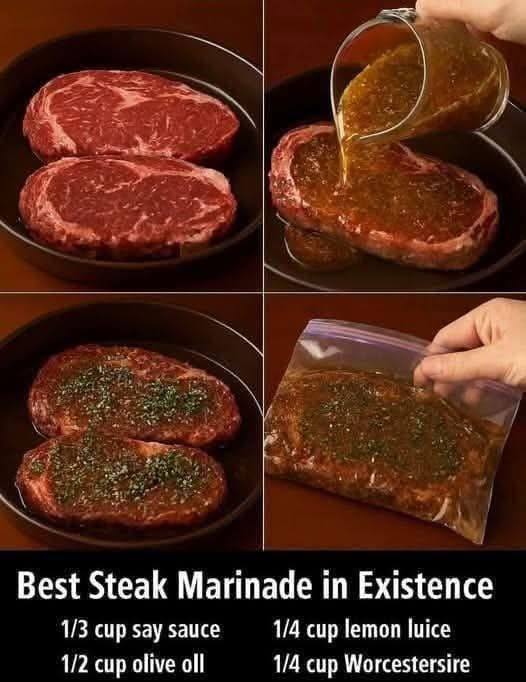
- 1/3 cup Soy Sauce
- 1/2 cup Olive Oil
- 1/4 cup Lemon Juice (freshly squeezed preferred)
- 1/4 cup Worcestershire Sauce
- 1 tablespoon dried parsley (optional, but recommended for visual appeal and subtle herb notes)
- 1 teaspoon garlic powder (optional, for an extra aromatic kick)
- 1/2 teaspoon black pepper (optional, freshly ground preferred)
Instructions
- Prepare Your Steak: Start by patting your steaks thoroughly dry with paper towels. This is a crucial step that helps the marinade adhere better and also promotes a better sear later on. If there’s any silver skin or excessive fat, you can trim it, but leave a good fat cap for flavor.
- Whisk the Marinade: In a medium-sized bowl, combine the Soy Sauce, Olive Oil, Lemon Juice, and Worcestershire Sauce. If using, add the dried parsley, garlic powder, and black pepper. Whisk vigorously until all ingredients are well combined and the mixture appears homogenous. The olive oil will help emulsify the other liquids, creating a smooth, rich marinade.
- Marinate the Steaks: Place your dried steaks into a large, resealable plastic bag (like a Ziploc bag). Alternatively, you can use a shallow non-reactive dish, but a bag ensures maximum contact with the marinade and easier turning.
- Pour and Seal: Carefully pour the entire marinade mixture over the steaks in the bag. Squeeze out as much air as possible from the bag before sealing it tightly. If using a dish, ensure the steaks are submerged or turn them occasionally.
- Refrigerate: Place the sealed bag with the steaks in the refrigerator. For optimal flavor and tenderness, marinate for at least 2 hours. For truly spectacular results, aim for 4-8 hours. If you have the time, you can even marinate overnight (up to 12 hours) for maximum flavor penetration, especially for thicker cuts. For thinner cuts or if you’re sensitive to acidity, stick to the shorter end of the marinating time to avoid the “cooked” texture that acidic marinades can sometimes impart.
- Massage and Rotate: Every few hours, gently massage the bag or flip the steaks in the dish to ensure the marinade is evenly distributed and coats all surfaces of the meat. This helps the flavors penetrate uniformly.
- Prepare for Cooking: Approximately 30-60 minutes before you plan to cook, remove the steaks from the refrigerator and let them come to room temperature. This step is vital for more even cooking, ensuring the center of the steak cooks through without overcooking the exterior.
- Remove from Marinade: Once ready to cook, remove the steaks from the marinade. Discard any remaining marinade that has come into contact with the raw meat. Do NOT reuse it unless you boil it thoroughly for at least 5 minutes to create a sauce (though for this recipe, it’s best to discard). Pat the steaks dry again with paper towels. This helps achieve that coveted crust during searing.
- Cook Your Steak: Cook your marinated masterpiece using your preferred method (grilling, pan-searing, or broiling). Aim for high heat to get a beautiful sear.
- Rest the Steak: After cooking, transfer the steaks to a cutting board and tent them loosely with aluminum foil. Let them rest for 5-10 minutes. This allows the juices to redistribute throughout the meat, resulting in a more tender and juicy steak.
- Slice and Serve: Slice against the grain and serve immediately. Enjoy the rich, tender, and incredibly flavorful steak you’ve just created!
Cooking Tips and Variations
Achieving the “Best Steak Marinade in Existence” isn’t just about the ingredients; it’s also about a few key techniques and considerations that will elevate your final dish. Here are some pro tips and variations to make your marinated steak truly legendary.
Tips for Best Results:
- Don’t Skip Patting Dry: This cannot be stressed enough. Before marinating and especially before cooking, pat your steaks dry with paper towels. Excess moisture on the surface of the meat will steam rather than sear, preventing that beautiful, flavorful crust we all crave.
- Room Temperature is Key: Removing your steaks from the fridge 30-60 minutes before cooking allows them to come to room temperature. This helps the steak cook more evenly from edge to center, preventing a cold, undercooked middle or an overcooked exterior.
- High Heat for Searing: Whether grilling or pan-searing, start with high heat. This creates the Maillard reaction, developing a rich brown crust and complex flavors. For pan-searing, use a heavy-bottomed pan like cast iron and a high smoke point oil (like grapeseed or canola) in addition to the olive oil already present in the marinade.
- Don’t Overcrowd the Pan/Grill: If pan-searing, cook steaks in batches if necessary. Overcrowding lowers the temperature of the cooking surface, leading to steaming instead of searing.
- Use a Meat Thermometer: The only way to truly know your steak’s doneness is with an instant-read meat thermometer.
- Rare: 125-130°F (52-54°C)
- Medium-Rare: 130-135°F (54-57°C)
- Medium: 135-140°F (57-60°C)
- Medium-Well: 140-145°F (60-63°C)
- Rest Your Steak: This is arguably the most crucial step after cooking. Resting allows the muscle fibers to relax and reabsorb the juices that have migrated to the center during cooking. If you cut into it too soon, those precious juices will spill out, leaving you with a drier steak. Tent loosely with foil for 5-10 minutes.
- Slice Against the Grain: For maximum tenderness, always slice your steak against the grain (perpendicular to the direction of the muscle fibers). This shortens the fibers, making each bite easier to chew.
Remember that the temperature will rise by 5-10 degrees during resting.
Variations to Experiment With:
- Herb Power-Up: While dried parsley is suggested, feel free to experiment with other dried herbs. Dried oregano, thyme, or a pre-made Italian herb blend would all work beautifully. For a fresh touch, add a tablespoon of finely chopped fresh rosemary or thyme during the last hour of marinating.
- Spice It Up: For those who love a little heat, add a pinch of red pepper flakes to the marinade. Smoked paprika can also add a delightful smoky depth.
- Garlic and Onion Boost: If you’re a garlic lover, double the garlic powder or add 2-3 cloves of minced fresh garlic. For an extra layer of savory flavor, a teaspoon of onion powder is a fantastic addition.
- Sweet & Savory Twist: A tablespoon of brown sugar or honey can add a subtle sweetness that balances the savory and tangy notes, and also helps with caramelization during searing.
- Mustard Kick: A teaspoon of Dijon mustard can add a piquant, tangy note and help emulsify the marinade, making it even more cohesive.
- Citrus Swap: While lemon juice provides a fantastic bright acidity, you could experiment with lime juice for a slightly different citrusy zing.
- Umami Overload: For an even deeper umami punch, consider adding a teaspoon of mushroom powder or a splash of fish sauce (don’t worry, it won’t make your steak taste like fish, but it will enhance the savory depth).
By following these tips and feeling free to experiment with the variations, you can truly make this “Best Steak Marinade in Existence” your own, tailoring it to your personal taste preferences and ensuring a perfectly cooked, incredibly flavorful steak every time.
Storage and Reheating
Proper storage and reheating are key to enjoying your delicious marinated steak even after the initial meal. While steak is always best fresh off the grill or pan, these tips will help you preserve its quality.
Storage:
- Cooked Steak: Once your steak is cooked and cooled, place any leftovers in an airtight container. This will protect it from air exposure and prevent it from drying out or absorbing other food odors in the refrigerator.
- Refrigeration Time: Cooked steak can be safely stored in the refrigerator for 3-4 days.
- Freezing Cooked Steak: For longer storage, you can freeze cooked steak. Wrap individual slices or whole pieces tightly in plastic wrap, then an additional layer of aluminum foil, or place them in a freezer-safe bag. This double layer helps prevent freezer burn. Cooked steak can be frozen for up to 2-3 months. Thaw frozen steak overnight in the refrigerator before reheating.
Reheating:
Reheating steak can be tricky, as it’s easy to overcook it and dry it out. The goal is to warm it through gently without cooking it further.
- Oven Method (Recommended for best results):
- Preheat your oven to a low temperature, around 250°F (120°C).
- Place the leftover steak on a wire rack set over a baking sheet. This allows for even heating and prevents the bottom from getting soggy.
- Heat for 15-25 minutes, or until the steak is warmed through to your desired temperature. Use a meat thermometer to check; aim for around 100-110°F (38-43°C) for medium-rare.
- For a refreshed crust, you can quickly sear the steak in a hot, lightly oiled pan for 30-60 seconds per side after it comes out of the oven.
- Skillet Method:
- Heat a cast iron skillet or heavy-bottomed pan over medium-low heat.
- Add a small amount of oil or butter.
- Once warm, add the steak and cook for 2-4 minutes per side, or until heated through. Keep the heat low to avoid overcooking.
- Microwave (Use with caution):
- While convenient, the microwave is generally not recommended for reheating steak as it can quickly make it tough and chewy.
- If you must use it, place the steak on a microwave-safe plate, cover it with a damp paper towel (this helps retain moisture), and heat in short bursts (30 seconds at a time) on a lower power setting until just warmed.
Frequently Asked Questions
Can I marinate the steak for longer than 12 hours?
While some marinades can go for longer, this particular recipe contains lemon juice, which is acidic. Acid helps tenderize meat by breaking down muscle fibers, but if left for too long (e.g., over 12-18 hours), it can start to “cook” the meat, leading to a mushy or mealy texture on the surface. For optimal results with this marinade, stick to the 2-12 hour window.
Do I need to rinse the marinade off the steak before cooking?
No, you do not need to rinse the marinade off. In fact, doing so would wash away much of the flavor you’ve worked to infuse. However, it is crucial to pat the steak very dry with paper towels after removing it from the marinade. This removes excess moisture from the surface, which is essential for achieving a good sear and a flavorful crust during cooking.
What if I don’t have all the marinade ingredients?
The four core ingredients (Soy Sauce, Olive Oil, Lemon Juice, and Worcestershire Sauce) are what make this marinade truly shine, each playing a vital role. While you could omit the optional herbs and spices, substituting the core ingredients would fundamentally change the marinade’s character. If you’re missing one of the main four, it might be best to try a different marinade recipe or acquire the missing ingredient for the best possible outcome.
Can I use this marinade for other types of meat?
Absolutely! This versatile marinade works wonderfully with other cuts of beef, such as flank steak, skirt steak, or tri-tip. It’s also fantastic for chicken breasts or thighs, and even pork chops. Adjust marinating times accordingly; leaner meats like chicken breasts might only need 1-4 hours.