
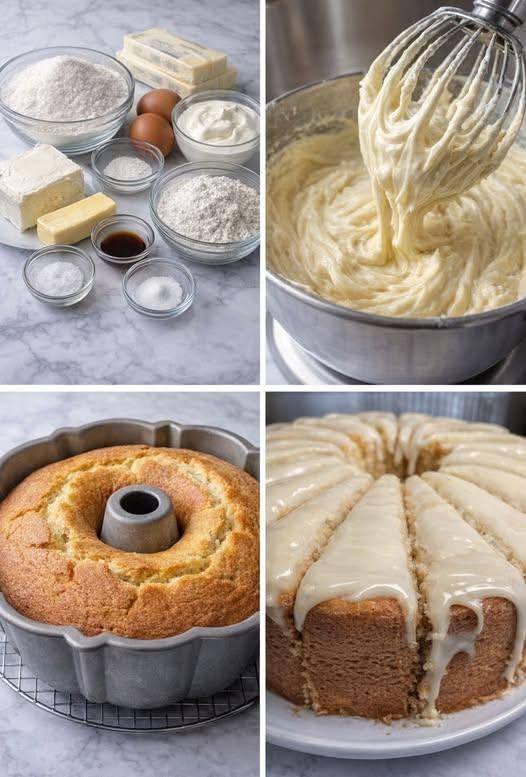

Introduction
There are few things as comforting and universally loved as a slice of perfectly baked pound cake. Its dense, yet tender crumb and rich flavor evoke a sense of nostalgia, a taste of home. But what if we told you that classic could be elevated to an even more sublime experience? Enter the Cream Cheese Pound Cake – a culinary masterpiece that takes everything you adore about traditional pound cake and infuses it with an unparalleled richness and an irresistible, melt-in-your-mouth moistness thanks to the star ingredient: cream cheese.
This isn’t just any pound cake; it’s a celebration of texture and flavor. The cream cheese works its magic, ensuring each bite is incredibly tender, almost custardy, and never dry. The exterior bakes to a beautiful golden-brown, forming a delicate crust that offers a delightful contrast to the soft interior. Whether you’re looking for an elegant dessert to impress guests, a delightful addition to your brunch spread, or simply a comforting treat for a quiet afternoon, this Cream Cheese Pound Cake delivers. Its versatility is unmatched – delicious on its own, it also serves as the perfect canvas for fresh berries, a dollop of whipped cream, or a simple, sweet glaze.
We’ve crafted this recipe to be approachable for home bakers of all skill levels, ensuring that everyone can achieve a bakery-worthy result. From the careful creaming of butter and sugar to the gentle folding of ingredients, every step is designed to create a pound cake that is both deeply satisfying and incredibly easy to make. Get ready to fill your kitchen with the sweet aroma of baking and discover your new favorite dessert. This Cream Cheese Pound Cake is more than just a recipe; it’s an invitation to create delicious memories.
Nutritional Information
Per serving (approximate values):
- Calories: 450
- Protein: 5g
- Carbohydrates: 55g
- Fat: 25g
- Fiber: 1g
- Sodium: 280mg
Ingredients
- 1 cup (2 sticks) unsalted butter, softened to room temperature
- 8 ounces full-fat cream cheese, softened to room temperature
- 3 cups granulated sugar
- 6 large eggs, at room temperature
- 1 tablespoon vanilla extract
- 3 cups all-purpose flour
- 1/2 teaspoon baking powder
- 1/2 teaspoon salt
- 1/2 cup whole milk, buttermilk, or sour cream, at room temperature
For the Cream Cheese Glaze:
- 4 ounces full-fat cream cheese, softened
- 2 cups powdered sugar, sifted
- 2-3 tablespoons whole milk, heavy cream, or half-and-half
- 1/2 teaspoon vanilla extract
Instructions
- Prepare Your Pan: Preheat your oven to 325°F (160°C). Thoroughly grease and flour a 10-12 cup Bundt pan, ensuring every crevice is coated. Tap out any excess flour. This step is crucial for easy release of the cake.
- Combine Dry Ingredients: In a medium bowl, whisk together the all-purpose flour, baking powder, and salt. Set aside.
- Cream Fats and Sugar: In the bowl of a stand mixer fitted with the paddle attachment (or using a large bowl and a hand mixer), beat the softened butter and softened cream cheese together on medium speed until smooth and well combined, about 2 minutes. Add the granulated sugar gradually, beating on medium-high speed until the mixture is light, fluffy, and pale in color, about 5-7 minutes. Scrape down the sides of the bowl as needed. This creaming process incorporates air, which is essential for the cake’s tender crumb.
- Add Eggs Gradually: Add the eggs one at a time, beating well after each addition until fully incorporated. Do not rush this step. After all eggs are added, beat for another minute until the mixture is light and fluffy again. Stir in the vanilla extract.
- Alternate Dry and Wet Ingredients: With the mixer on low speed, add about one-third of the flour mixture to the wet ingredients, mixing just until combined. Then, add half of the milk (or buttermilk/sour cream), mixing until just incorporated. Repeat with another third of the flour mixture, followed by the remaining milk. Finish by adding the last third of the flour mixture, mixing only until no streaks of flour remain. Be careful not to overmix the batter, as this can lead to a tough cake.
- Fill the Pan: Pour the batter evenly into the prepared Bundt pan. Gently tap the pan on the counter a few times to release any air bubbles and level the batter.
- Bake the Cake: Bake for 60-80 minutes, or until a wooden skewer or toothpick inserted into the center of the cake comes out clean. Baking time can vary depending on your oven, so start checking at 60 minutes. The top should be golden brown and spring back when lightly touched.
- Cool the Cake: Once baked, remove the cake from the oven and let it cool in the Bundt pan on a wire rack for 15-20 minutes. This allows the cake to set and prevents it from breaking when inverted.
- Invert and Cool Completely: After 15-20 minutes, carefully invert the cake onto the wire rack and lift off the Bundt pan. Allow the cake to cool completely before glazing, which can take 1-2 hours. Glazing a warm cake will cause the glaze to melt and run off.
- Prepare the Cream Cheese Glaze: While the cake cools, prepare the glaze. In a medium bowl, beat the softened cream cheese until smooth. Gradually add the sifted powdered sugar, mixing until well combined. Add 2 tablespoons of milk (or cream) and vanilla extract, mixing until smooth. If the glaze is too thick, add more milk, a teaspoon at a time, until it reaches a pourable, yet thick, consistency.
- Glaze the Cake: Once the cake is completely cool, generously drizzle the cream cheese glaze over the top, allowing it to drip down the sides. For a neater drizzle, you can use a spoon or a whisk.
- Serve and Enjoy: Let the glaze set for a few minutes before slicing and serving.
Cooking Tips and Variations
Achieving the perfect Cream Cheese Pound Cake is all about paying attention to a few key details. Here are some tips to ensure your cake turns out beautifully every time:
- Room Temperature Ingredients are Non-Negotiable: This is arguably the most important tip. Softened butter and cream cheese cream together smoothly with the sugar, incorporating air and creating a light, fluffy base. Cold ingredients will result in a lumpy batter and a denser cake. Similarly, room temperature eggs emulsify better and prevent the batter from curdling.
- Don’t Overmix the Batter: Once you start adding the flour, mix only until just combined. Overmixing develops the gluten in the flour, leading to a tough, dry cake. A few small streaks of flour are better than an overmixed batter.
- Proper Pan Preparation: Greasing and flouring your Bundt pan meticulously is crucial for a clean release. Use shortening or butter to grease, then dust thoroughly with flour, tapping out any excess. For extra insurance, you can even use a baking spray that contains flour.
- Oven Thermometer is Your Friend: Oven temperatures can vary significantly. Using an oven thermometer placed inside your oven will give you an accurate reading and help prevent under or over-baking.
- Don’t Peek Too Early: Resist the urge to open the oven door during the first 45-50 minutes of baking, as this can cause the cake to fall.
- Cool Completely Before Glazing: Patience is key here! Glazing a warm cake will cause the glaze to melt and run off, creating a messy rather than elegant finish.
- Sift Powdered Sugar for Glaze: Sifting ensures a smooth, lump-free glaze.
Variations:
- Lemon Zest: Add 2 tablespoons of lemon zest to the batter for a bright, citrusy flavor. You can also add a teaspoon of lemon juice to the glaze for a zesty kick.
- Almond Extract: Substitute half of the vanilla extract with almond extract for a delicate, nutty flavor.
- Chocolate Marble: Before pouring the batter into the pan, swirl in 1/2 cup of melted and slightly cooled dark chocolate.
- Nutty Crunch: Fold in 1/2 cup of chopped pecans or walnuts into the batter just before pouring into the pan.
- Coconut Dream: Add 1/2 cup of shredded sweetened coconut to the batter and a tablespoon of coconut extract.
- Spice It Up: For a fall-inspired twist, add 1 teaspoon of ground cinnamon and 1/2 teaspoon of nutmeg to the dry ingredients.
Storage and Reheating
Proper storage is key to keeping your Cream Cheese Pound Cake fresh, moist, and delicious for as long as possible.
- At Room Temperature: If your cake is glazed, it’s best to store it loosely covered with plastic wrap or in an airtight container at room temperature for up to 2-3 days. The glaze helps to seal in moisture. If your kitchen is particularly warm, or if you prefer, you can refrigerate it.
- In the Refrigerator: For longer storage, or if the cake is unglazed, wrap it tightly in plastic wrap and then aluminum foil, or place it in an airtight container. It will keep well in the refrigerator for up to 5-7 days. The refrigerator can sometimes dry out cakes, so ensure it’s well-wrapped.
- Freezing: Cream Cheese Pound Cake freezes beautifully! This is a fantastic make-ahead option.
- Unglazed Cake: Once the cake is completely cooled, wrap it tightly in several layers of plastic wrap, then an outer layer of aluminum foil.
- Glazed Cake: If glazed, freeze the cake first uncovered on a baking sheet until the glaze is solid. Then wrap it tightly as described above.
- Storage Time: It can be stored in the freezer for up to 3 months.
- Thawing: To thaw, simply remove the cake from the freezer and let it sit at room temperature, still wrapped, for several hours or overnight. Once thawed, you can re-glaze an unglazed cake if desired.
Reheating:
Pound cake is generally best served at room temperature, as this allows its full flavor and moist texture to shine. If your cake has been refrigerated, simply let it come to room temperature on the counter for about 30-60 minutes before serving. You typically don’t need to “reheat” pound cake in the traditional sense, but if you desire a slightly warm slice, you can gently warm individual slices in the microwave for 10-15 seconds (be careful not to overheat, or it can become tough) or in a preheated oven at 250°F (120°C) for 5-10 minutes.
Frequently Asked Questions
Why did my pound cake come out dry?
A dry pound cake is often the result of overmixing the batter or overbaking. Overmixing develops the gluten in the flour, making the cake tough and dry. Overbaking removes too much moisture. Ensure you mix only until the ingredients are just combined and start checking for doneness at the lower end of the baking time range. Using room temperature ingredients also contributes to a moist cake.
Can I make this recipe in a different pan?
Yes, you can! While the Bundt pan offers a beautiful presentation, you can also bake this recipe in two 9×5-inch loaf pans or a 10-inch tube pan. If using loaf pans, reduce the baking time to approximately 50-60 minutes. For a tube pan, the baking time will be similar to a Bundt pan, 60-80 minutes. Always check for doneness with a skewer. Remember to adjust greasing and flouring for the specific pan you choose.
My cake stuck to the Bundt pan. What went wrong?
The most common reasons for a cake sticking to a Bundt pan are insufficient greasing and flouring, or not allowing the cake to cool long enough in the pan before inverting. Ensure you thoroughly coat every crevice of the pan with butter or shortening, then dust generously with flour, tapping out the excess. For a more reliable release, consider using a baking spray specifically designed for Bundt pans that contains flour. Also, always let the cake cool in the pan for 15-20 minutes before inverting; this allows it to firm up and pull away from the sides.
How far in advance can I make this pound cake?
This Cream Cheese Pound Cake is an excellent make-ahead dessert. You can bake the cake up to 2-3 days in advance and store it at room temperature (covered). If you plan to freeze it, you can make it several weeks or even up to 3 months in advance. For the freshest taste and appearance, apply the glaze closer to serving time, especially if you’ve frozen the cake.