
Introduction
There’s something uniquely comforting and incredibly rewarding about the aroma of freshly baked bread wafting through your home. It’s a scent that instantly transports you to a place of warmth and nostalgia, promising a taste of pure, unadulterated goodness. While store-bought bread is convenient, nothing quite compares to the soft, fluffy texture and rich, wholesome flavor of a loaf made with your own hands. This classic homemade sandwich bread recipe isn’t just about baking; it’s about creating a staple that will elevate your everyday meals, from simple toast in the morning to hearty sandwiches for lunch.
This recipe is designed to be straightforward and accessible, even for those who might be new to bread making. We’ll walk you through each step, from activating the yeast to shaping the perfect loaf, ensuring you achieve a consistently delicious result every time. Imagine sinking your teeth into a slice that’s perfectly golden on the outside and incredibly tender on the inside – that’s the magic of this classic sandwich bread. It’s robust enough to hold up to your favorite fillings, yet delicate enough to simply enjoy with a smear of butter. Once you experience the joy of baking your own bread, you’ll wonder why you ever bought it from the store.
Beyond its incredible taste, making bread at home gives you complete control over the ingredients, allowing you to avoid preservatives and artificial additives often found in commercial loaves. This recipe uses simple, wholesome ingredients you likely already have in your pantry, transforming them into a culinary masterpiece. Get ready to impress your family and friends, and most importantly, treat yourself to the unmatched pleasure of homemade bread. Let’s dive in and create a loaf that will quickly become a cherished part of your kitchen repertoire.
Nutritional Information
Per serving (approximate values, based on 12 slices per loaf):
- Calories: 180
- Protein: 6g
- Carbohydrates: 32g
- Fat: 3g
- Fiber: 1g
- Sodium: 250mg
Ingredients
- 2 cups warm milk (105-115°F / 40-46°C)
- 2 tablespoons granulated sugar, divided
- 2¼ teaspoons (1 packet) active dry yeast
- 6 cups all-purpose flour, plus more for dusting
- 2 teaspoons salt
- 4 tablespoons unsalted butter, melted and cooled, plus more for greasing and brushing
Instructions
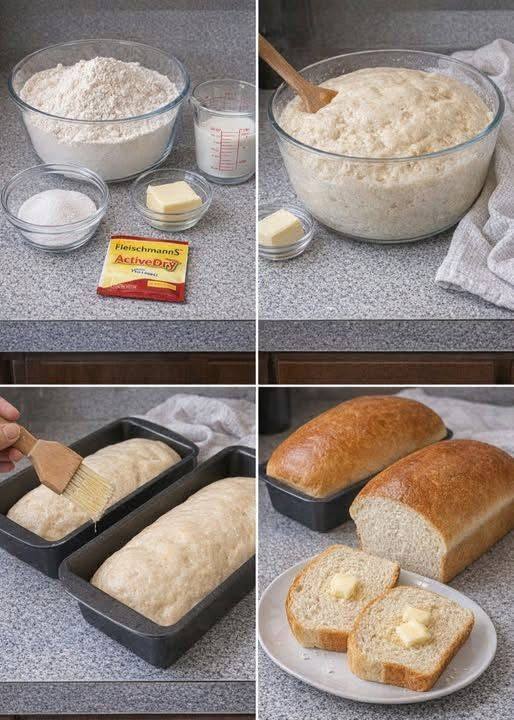
- Activate the Yeast: In a large mixing bowl, combine the warm milk and 1 tablespoon of the granulated sugar. Sprinkle the active dry yeast over the top. Stir gently and let it sit for 5-10 minutes, or until the mixture becomes foamy. This indicates the yeast is active and ready to go.
- Combine Dry Ingredients: In a separate large bowl, whisk together 5½ cups of the all-purpose flour and the salt.
- Mix the Dough: Add the remaining 1 tablespoon of granulated sugar and the melted and cooled butter to the activated yeast mixture. Stir well. Gradually add the flour mixture to the wet ingredients, mixing with a sturdy spoon or your hands until a shaggy dough forms.
- Knead the Dough: Turn the dough out onto a lightly floured surface. Knead for 8-10 minutes, or until the dough is smooth, elastic, and no longer sticky. If the dough is too sticky, add a very small amount of flour, a tablespoon at a time, until it reaches the right consistency. To test for proper kneading, perform the “windowpane test”: pinch off a small piece of dough and gently stretch it. If you can stretch it thin enough to see light through it without tearing, it’s ready.
- First Rise (Bulk Fermentation): Lightly grease a large bowl with butter or cooking spray. Place the kneaded dough in the bowl, turning it once to coat the top. Cover the bowl tightly with plastic wrap or a clean kitchen towel. Let the dough rise in a warm, draft-free place for 1 to 1½ hours, or until it has doubled in size.
- Prepare Loaf Pans: While the dough is rising, lightly grease two 9×5-inch loaf pans with butter or cooking spray.
- Shape the Loaves: Once the dough has doubled, gently punch it down to release the air. Turn the dough out onto a lightly floured surface and divide it into two equal portions. For each portion, flatten the dough into a rectangle (about 9×12 inches). Starting from one of the shorter ends, tightly roll the dough into a log. Pinch the seam closed along the bottom and tuck the ends under to create a neat loaf shape. Place each shaped dough log, seam-side down, into the prepared loaf pans.
- Second Rise (Proofing): Cover the loaf pans loosely with plastic wrap or a clean kitchen towel. Let the dough rise again in a warm, draft-free place for another 30-45 minutes, or until the dough has risen about 1 inch above the rim of the pans. While the dough is doing its second rise, preheat your oven to 375°F (190°C).
- Bake the Bread: Once the loaves have risen sufficiently, place them in the preheated oven. Bake for 30-35 minutes, or until the tops are golden brown and the internal temperature reaches 200-210°F (93-99°C) with an instant-read thermometer. For a softer crust, you can brush the tops with melted butter immediately after removing them from the oven.
- Cool Completely: Carefully remove the loaves from the oven. Let them cool in the pans for 5-10 minutes before transferring them to a wire rack to cool completely. Cooling completely is crucial for the internal structure and texture of the bread. Resist the urge to slice into them too soon!
Cooking Tips and Variations
Achieving the perfect loaf of sandwich bread is incredibly satisfying, and with a few key tips, you can ensure success every time. Firstly, the temperature of your milk for activating the yeast is paramount. It should be warm enough to wake up the yeast but not so hot that it kills it. Aim for a temperature between 105-115°F (40-46°C); if it’s too cool, the yeast won’t activate, and if it’s too hot, it will die, resulting in a dense, flat loaf. A kitchen thermometer is your best friend here. Another crucial aspect is kneading. Don’t skimp on the kneading time; it’s what develops the gluten, which gives your bread its structure, elasticity, and that wonderful chewiness. If your dough feels too sticky, resist the urge to add too much flour, as this can make your bread dry. Instead, lightly flour your hands and the work surface, and continue kneading. The dough will become less sticky as the gluten develops. You’ll know it’s sufficiently kneaded when it’s smooth, elastic, and passes the windowpane test, where you can stretch a small piece thin enough to see light through it without tearing.
The rising environment also plays a significant role. Yeast loves warmth and a draft-free space. If your kitchen is cool, you can create a warm environment by preheating your oven to its lowest setting for a few minutes, then turning it off and placing the covered dough inside. Alternatively, placing the bowl near a sunny window or on top of a warm appliance can work. Just be sure to cover the dough to prevent it from drying out. When it comes to baking, don’t overbake your bread. Overbaking can lead to a dry, crumbly texture. Keep an eye on the color; a golden-brown crust is usually a good indicator. For extra assurance, an instant-read thermometer inserted into the center of the loaf should read between 200-210°F (93-99°C). Finally, and perhaps most importantly, allow your bread to cool completely on a wire rack before slicing. Slicing warm bread can lead to a gummy texture because the starches are still setting. Patience is a virtue when it comes to homemade bread!
This classic recipe is a fantastic canvas for various flavor additions. For a touch of sweetness, consider adding ½ cup of raisins or dried cranberries to the dough during the last few minutes of kneading. A teaspoon of ground cinnamon or cardamom can also be incorporated with the dry ingredients for a fragrant loaf perfect for toast. If you prefer a savory twist, try adding 2 tablespoons of dried herbs like oregano, basil, or rosemary, along with ½ cup of shredded Parmesan or cheddar cheese, to the dough during the mixing stage. These variations are wonderful for garlic bread or as an accompaniment to soups and stews. For a richer, slightly sweeter crust, you can brush the top of the loaves with an egg wash (1 egg beaten with 1 tablespoon of water) before baking. For a softer, less crisp crust, brush with melted butter or milk immediately after they come out of the oven. You can also experiment with different types of flour, such as a portion of whole wheat flour for added fiber and a nuttier flavor, though this may require slight adjustments to the liquid content.
Storage and Reheating
Proper storage is key to keeping your homemade sandwich bread fresh and delicious for as long as possible. Once the bread has completely cooled, which is crucial for preventing condensation and sogginess, you have a few options. For short-term storage (2-3 days), wrap the loaf tightly in plastic wrap or aluminum foil, or place it in an airtight bread bag or container. Store it at room temperature, away from direct sunlight or heat, as these can accelerate spoilage. Avoid refrigerating homemade bread, as the cold temperature can actually cause it to stale faster due to a process called retrogradation of starches. If you find your bread is starting to dry out slightly after a day or two, a quick toast will usually revive its texture and flavor beautifully.
For longer storage, freezing is an excellent option. Once the bread is completely cool, slice it into individual portions (this makes it easy to grab just what you need) or wrap the entire loaf tightly in plastic wrap, then place it inside a freezer-safe bag or wrap it again in aluminum foil. This double layer of protection helps prevent freezer burn. Frozen bread can last for up to 2-3 months. To thaw individual slices, simply pop them directly into a toaster or microwave for a few seconds. To thaw a whole loaf, remove it from the freezer and let it sit at room temperature for several hours, or overnight. You can also gently warm a thawed loaf in a preheated oven at 300°F (150°C) for 10-15 minutes to refresh its crust and interior, making it taste almost as good as freshly baked.
Frequently Asked Questions
Why didn’t my bread rise?
There are a few common reasons why bread might not rise. The most frequent culprit is inactive yeast. Ensure your milk is at the correct temperature (105-115°F / 40-46°C); if it’s too hot, it kills the yeast, and if it’s too cold, the yeast won’t activate. Always check the expiration date on your yeast packet, as old yeast loses its potency. Another reason could be insufficient kneading, which means the gluten hasn’t developed enough to trap the gas produced by the yeast. Lastly, a cold or drafty environment can significantly slow down or halt the rising process. Make sure your dough is in a warm, draft-free spot.
Can I make this bread with whole wheat flour?
Yes, you can substitute some of the all-purpose flour with whole wheat flour, but it will change the texture and potentially the absorption rate. Whole wheat flour contains more bran and germ, which can interfere with gluten development and absorb more liquid. Start by replacing 1-2 cups of all-purpose flour with whole wheat flour. You might need to add an extra tablespoon or two of milk to achieve the right dough consistency. The resulting bread will be denser and have a nuttier flavor. For the best results, a 50/50 blend of all-purpose and whole wheat flour often yields a good balance of texture and flavor.
How can I tell if my bread is fully baked?
The best way to tell if your bread is fully baked is by its internal temperature. An instant-read thermometer inserted into the center of the loaf should register between 200-210°F (93-99°C). Visually, the crust should be a deep golden brown, and when you tap the bottom of the loaf, it should sound hollow. If the top is browning too quickly, you can loosely tent the loaf with aluminum foil for the remainder of the baking time to prevent it from burning.
Why is it important to cool the bread completely before slicing?
Cooling the bread completely on a wire rack is crucial for several reasons. While the bread is still hot, the internal starches are still gelatinizing and setting. Slicing into hot bread can result in a gummy, doughy texture because the steam hasn’t fully escaped and the structure hasn’t fully set. Cooling allows the moisture to redistribute evenly throughout the loaf and the internal structure to firm up, resulting in that perfect, soft, and airy crumb. It also makes the bread much easier to slice cleanly without tearing or squishing.