
Introduction
There are some desserts that simply transport you back to childhood, to family gatherings, or to that cozy coffee shop on a rainy afternoon. Classic Carrot Cake with Cream Cheese Frosting is undeniably one of them. It’s a dessert that defies trends, remaining a perennial favorite for its comforting warmth, irresistible spices, and that perfectly moist texture. Far from being just “a cake with vegetables,” it’s a masterpiece of balanced flavors, where the natural sweetness of carrots marries beautifully with aromatic spices, creating a symphony of taste that’s both familiar and utterly delightful.
What truly elevates a good carrot cake to legendary status is its incredible moisture. Thanks to shredded carrots and a generous amount of oil, each bite is tender and rich, almost melting in your mouth. This isn’t a dry, crumbly cake; it’s a substantial, satisfying treat that feels homemade in the best possible way. And then there’s the cream cheese frosting – a tangy, sweet, and unbelievably smooth counterpoint that cuts through the richness of the cake, creating a perfect harmony. This iconic duo is why carrot cake has earned its place as a beloved classic, suitable for everything from a casual weeknight dessert to a celebratory centerpiece.
Forget the store-bought versions; making a homemade carrot cake is a rewarding experience, and surprisingly straightforward. The aroma alone as it bakes is enough to make your kitchen feel like the warmest place on earth. In this guide, we’re going to walk you through creating the ultimate Classic Carrot Cake with Cream Cheese Frosting – a recipe that promises a perfectly moist cake studded with crunchy nuts, all crowned with a luscious, tangy frosting. Get ready to bake a dessert that will earn you rave reviews and become a treasured recipe in your own collection.
Nutritional Information
Per serving (approximate values):
- Calories: 480
- Protein: 5g
- Carbohydrates: 55g
- Fat: 28g
- Fiber: 2g
- Sodium: 280mg
Ingredients
For the Carrot Cake:
- 2 cups (240g) all-purpose flour
- 2 teaspoons baking soda
- 1 teaspoon ground cinnamon
- ½ teaspoon ground nutmeg
- ¼ teaspoon ground ginger
- ¼ teaspoon ground cloves (optional, but highly recommended)
- ½ teaspoon salt
- 1 ½ cups (300g) granulated sugar
- ½ cup (100g) packed light brown sugar
- 1 cup (240ml) vegetable oil (or other neutral oil like canola or sunflower)
- 4 large eggs, at room temperature
- 1 teaspoon vanilla extract
- 3 cups (about 3 medium) finely grated carrots
- 1 cup (115g) chopped walnuts or pecans, lightly toasted (plus more for garnish)
- ½ cup (75g) raisins (optional)
For the Cream Cheese Frosting:
- 8 ounces (226g) full-fat cream cheese, softened
- ½ cup (113g) unsalted butter, softened
- 4 cups (480g) powdered sugar (confectioners’ sugar), sifted
- 1 teaspoon vanilla extract
- Pinch of salt
Instructions
For the Carrot Cake:
- Preheat your oven to 350°F (175°C). Grease and flour a 9×13 inch baking pan, or line it with parchment paper, leaving an overhang on the sides for easy removal.
- In a large bowl, whisk together the dry ingredients: all-purpose flour, baking soda, cinnamon, nutmeg, ginger, cloves (if using), and salt. Set aside.
- In a separate, larger bowl, whisk together the wet ingredients: granulated sugar, brown sugar, and vegetable oil until well combined.
- Add the eggs one at a time to the wet mixture, whisking well after each addition until fully incorporated. Stir in the vanilla extract.
- Gradually add the dry ingredient mixture to the wet mixture, mixing on low speed or by hand until just combined. Be careful not to overmix; a few streaks of flour are okay.
- Fold in the finely grated carrots, chopped nuts, and raisins (if using) until evenly distributed throughout the batter.
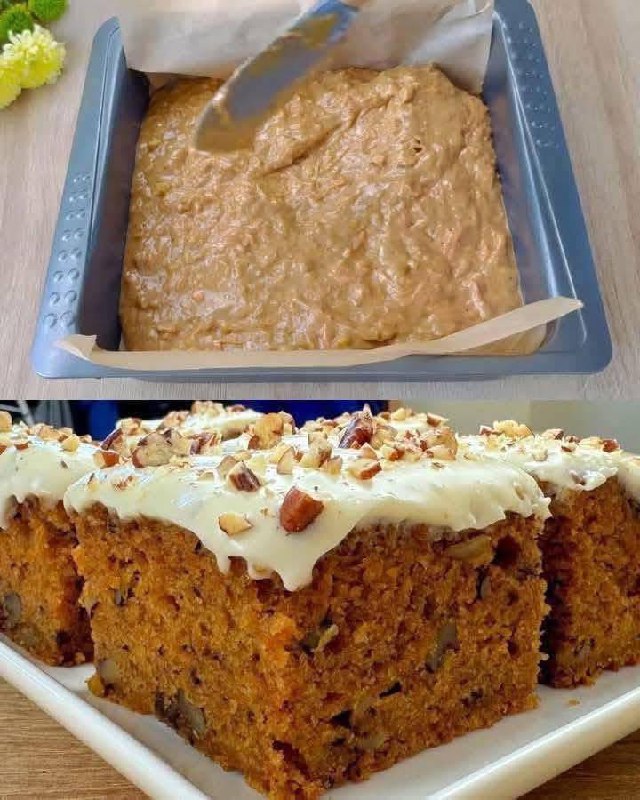
- Pour the batter into the prepared baking pan and spread evenly with a spatula.
- Bake for 30-40 minutes, or until a wooden skewer or toothpick inserted into the center comes out clean. Baking time may vary depending on your oven.
- Once baked, remove the cake from the oven and let it cool in the pan on a wire rack for about 15-20 minutes.
- Carefully invert the cake onto the wire rack, remove the pan, and peel off the parchment paper. Allow the cake to cool completely before frosting. This is crucial to prevent the frosting from melting.
For the Cream Cheese Frosting:
- In a large bowl, using an electric mixer (stand mixer with paddle attachment or a hand mixer), beat the softened cream cheese and softened butter together on medium speed until smooth and creamy, about 2-3 minutes. Make sure there are no lumps.
- Reduce the mixer speed to low and gradually add the sifted powdered sugar, one cup at a time, mixing until fully incorporated after each addition.
- Once all the powdered sugar is added, increase the speed to medium-high and beat for another 2-3 minutes until the frosting is light, fluffy, and smooth.
- Stir in the vanilla extract and a pinch of salt. Beat for a final 30 seconds to ensure everything is well combined.
Assembly:
- Once the cake is completely cooled, transfer it to a serving platter or leave it on the wire rack over a piece of parchment paper to catch any drips.
- Spread the cream cheese frosting evenly over the top of the cooled cake using an offset spatula or the back of a spoon. You can create swirls or leave it rustic.
- If desired, sprinkle extra chopped nuts over the top of the frosting for garnish.
- Slice and serve!
Cooking Tips and Variations
Achieving the perfect carrot cake is all about attention to detail. For the carrots, finely grate them either by hand or using a food processor. This ensures they soften and integrate beautifully into the cake, contributing moisture without being too chunky. Avoid using pre-shredded carrots from the store, as they tend to be drier and thicker. When it comes to spices, feel free to adjust them to your personal preference. Love cinnamon? Add a little extra! Want a bit more warmth? Up the ginger and a hint of cloves can really deepen the flavor profile. Don’t be afraid to experiment with the spice blend to make it uniquely yours.
Toasting your nuts before adding them to the batter or using them as a garnish is a game-changer. A quick toast in a dry pan or on a baking sheet in the oven brings out their essential oils, intensifying their nutty flavor and adding a delightful crunch. Pecans or walnuts are classic choices, but you could also try a mix. For an extra layer of flavor and texture, consider adding ½ cup of well-drained crushed pineapple or shredded coconut to the batter. These additions will boost moisture and add a tropical twist. If you’re not a fan of raisins, simply omit them, or swap them for dried cranberries or chopped dried apricots for a different kind of fruity chew.
When mixing the cake batter, remember the golden rule of baking: do not overmix. Once the dry ingredients are just incorporated into the wet, stop. Overmixing develops the gluten in the flour, leading to a tougher, less tender cake. A few streaks of flour are perfectly acceptable and will disappear during baking. For the frosting, ensure both your cream cheese and butter are at proper room temperature. This is crucial for achieving a smooth, lump-free frosting. If they’re too cold, your frosting will be lumpy; if too warm, it might be too soft. If your frosting seems too thin, you can add a little more sifted powdered sugar; if it’s too thick, a tiny splash of milk or heavy cream can help.
Storage and Reheating
Due to the cream cheese frosting, this cake must be stored in the refrigerator. Place any leftover cake in an airtight container to prevent it from drying out or absorbing odors from other foods in your fridge. It will stay fresh and delicious for up to 3-4 days when properly stored. While the cake itself can be stored at room temperature for a short period without frosting, the frosting makes refrigeration essential.
For the best flavor and texture, it’s highly recommended to serve carrot cake at room temperature. The cake’s flavors are more pronounced and the frosting becomes softer and creamier when it’s not straight from the fridge. To bring it to room temperature, simply take the cake out of the refrigerator about 30-60 minutes before you plan to serve it. This allows the frosting to soften slightly and the cake to become wonderfully tender.
Carrot cake is also an excellent candidate for making ahead or freezing. You can bake the cake layers a day or two in advance, let them cool completely, wrap them tightly in plastic wrap, and store them at room temperature until you’re ready to frost. For longer storage, the unfrosted cake can be wrapped tightly in plastic wrap and then aluminum foil and frozen for up to 2-3 months. Thaw it overnight in the refrigerator before frosting. The frosted cake can also be frozen, though the frosting’s texture might change slightly upon thawing. To freeze a frosted cake, flash freeze it uncovered until the frosting is firm, then wrap tightly in plastic wrap and foil. Thaw overnight in the refrigerator. There’s no need to reheat carrot cake; it’s always best served at room temperature.
Frequently Asked Questions
Can I use a different type of oil for the cake?
Yes, you can. While vegetable oil is commonly used for its neutral flavor, you can also use other neutral oils like canola oil, sunflower oil, or even a light olive oil if you prefer. These oils contribute to the cake’s moistness without imparting a strong flavor of their own. Avoid oils with very distinct flavors like extra virgin olive oil, as they can overpower the delicate spices of the carrot cake.
My cream cheese frosting is too runny/too stiff. How can I fix it?
If your cream cheese frosting is too runny, it’s likely due to using cream cheese or butter that was too warm, or not enough powdered sugar. To fix it, try adding more sifted powdered sugar, a quarter cup at a time, beating well after each addition until it reaches your desired consistency. If it’s too stiff, it might be due to too much powdered sugar or cold ingredients. You can thin it out by adding a very small amount of milk or heavy cream (start with ½ teaspoon) and beating until smooth and spreadable.
Do I have to use nuts and raisins in the cake?
Absolutely not! The beauty of homemade baking is customization. If you or your guests aren’t fans of nuts or raisins, feel free to omit them entirely. The cake will still be incredibly delicious and moist. If you want to add other inclusions, consider shredded coconut, chopped dried cranberries, or well-drained crushed pineapple for different flavor and texture profiles.